

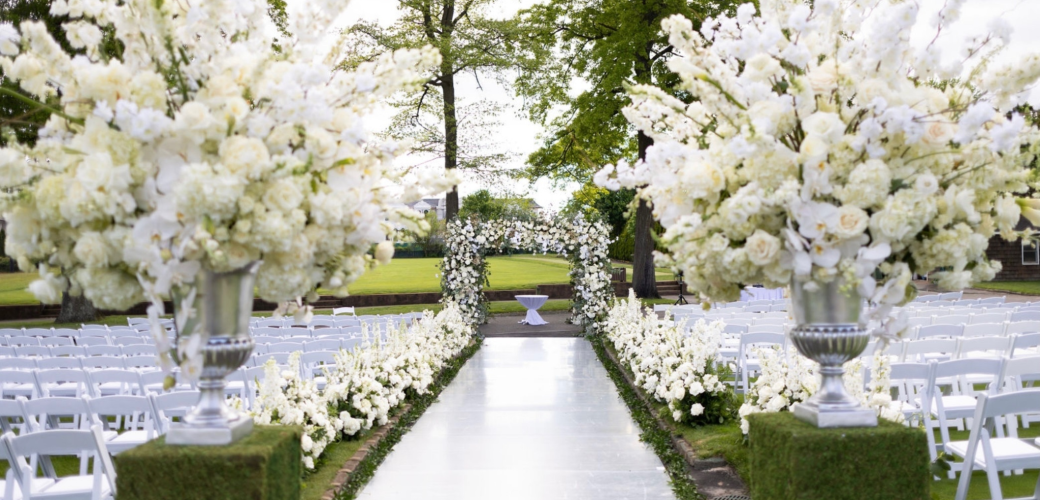
Choosing wedding flowers by season sounds simple. Spring has one set of flowers, summer has another, fall has another, and winter has its own language. In the Northeast, the reality is more nuanced. Weather, local growing windows, greenhouse supply, imports, and wholesale-market availability all shape what is possible.
Seasonality still matters. It affects texture, palette, performance, and the feeling of the room. But it should be treated as a design guide, not a fixed promise. The strongest floral designs begin with atmosphere, then use the season to support it.
What “In Season” Really Means
In the Northeast, “in season” can mean several things. A flower may be locally grown in Connecticut, the Hudson Valley, Westchester, or nearby regions. It may be grown elsewhere in the United States, imported, or greenhouse-grown outside its natural field season.
Availability and local seasonality are not the same. A flower can be available through the market without being locally in bloom. It can also be associated with a season without being right for every event date, venue, or weather condition.
Wedding flowers are never chosen in isolation. A cool ballroom, tented summer reception, outdoor ceremony, and private estate wedding all create different design and performance needs.
Spring Wedding Flowers
Spring flowers often feel soft, fresh, romantic, fragrant, and airy. Tulips, ranunculus, anemones, sweet peas, lilac, hellebores, and blooming branches are commonly associated with spring floral design.
These flowers can bring delicacy and movement into a wedding. Many are also sensitive to heat, handling, or long outdoor exposure. A flower that performs beautifully in a cool April ballroom may not be right for a warm outdoor ceremony later in the season. The design has to respond to the real conditions of the event.
Early Summer Wedding Flowers
Early summer is where many clients’ most romantic flower expectations live. Peonies are the clearest example. They are lush, full, and strongly associated with garden-style wedding design.
Garden roses, delphinium, stock, early hydrangea, and lisianthus can also support a generous, layered floral direction. The feeling is fuller than spring, but still fresh and romantic.
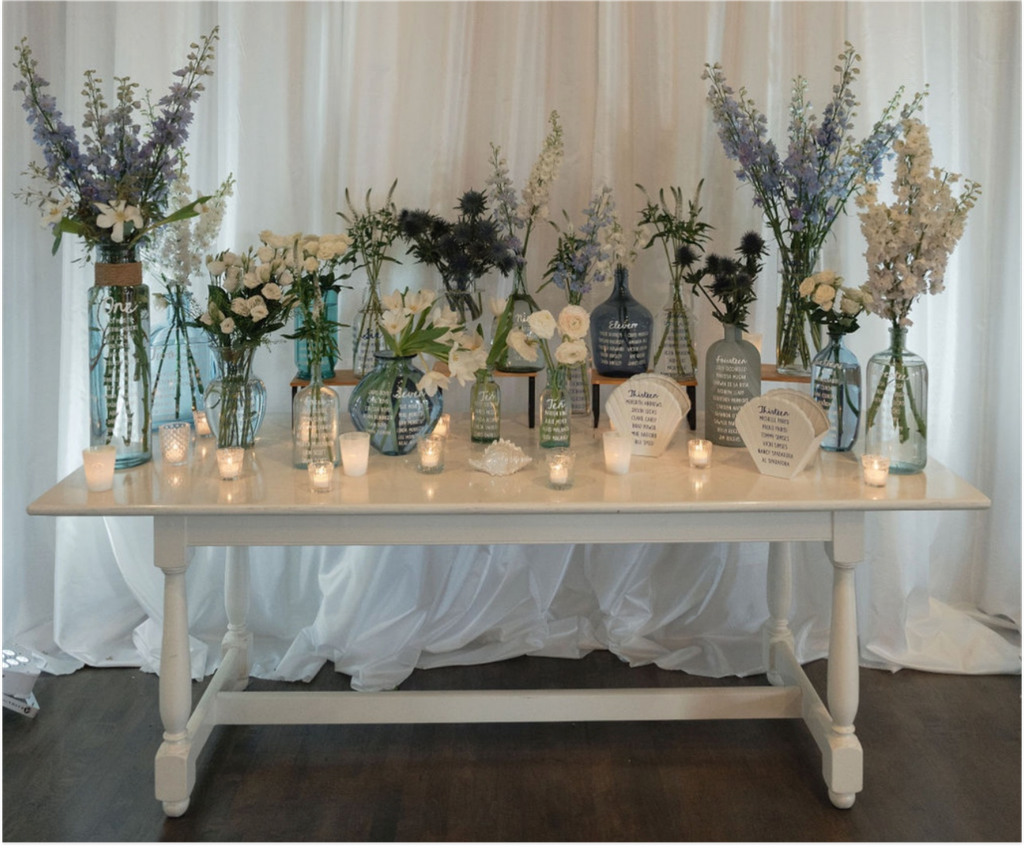
Highly desired flowers depend on timing and source. Peonies may be associated with early summer, but they cannot be promised for every date, color, or stage of openness. A designer may use them when they are right, or create a similar feeling through garden roses, ranunculus, or other flowers with fullness and movement.
Late Summer and Fall Wedding Flowers
Late summer flowers are richer, more textural, and often more expressive in color. Dahlias, hydrangea, amaranthus, cosmos, zinnias, and celosia are all associated with this part of the season, depending on source and market conditions.
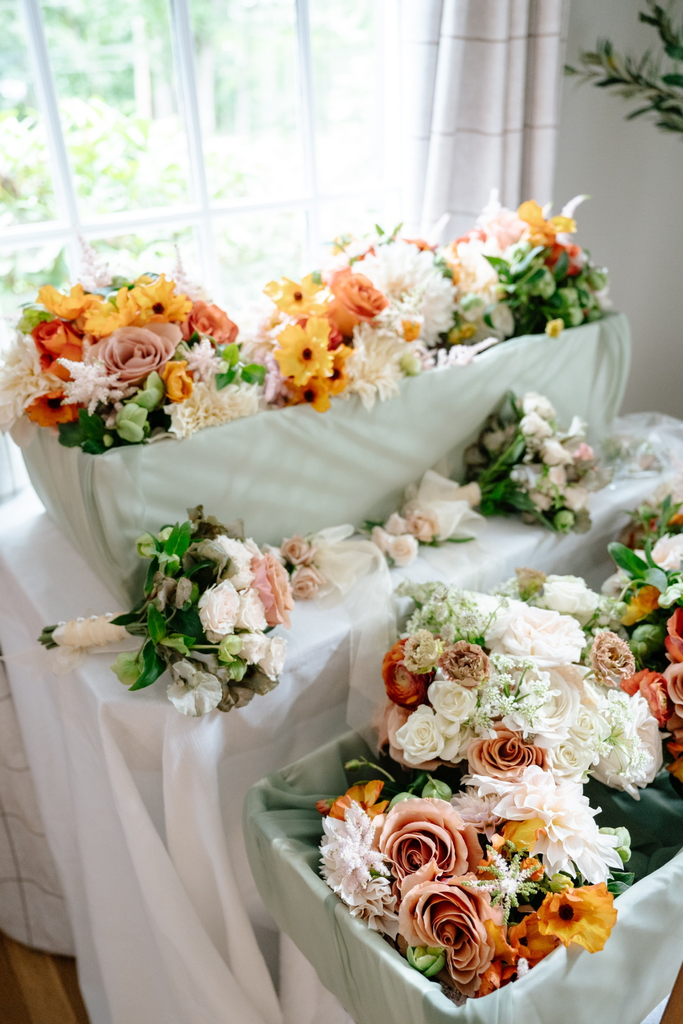
Where spring feels delicate, late summer can feel abundant and dimensional. Warm weather still matters. Hydrangea can create beautiful volume, and dahlias can bring extraordinary texture, but both need to be used thoughtfully.
Fall does not have to mean orange, rustic, or casual. In the Northeast, it can be one of the most sophisticated floral seasons when handled with restraint. Dahlias, heirloom mums, amaranthus, berries, branches, autumn hydrangea, and seasonal foliage can bring depth and structure. The palette can move toward burgundy, plum, copper, cream, bronze, green, chocolate, taupe, or muted neutrals.
What makes fall especially useful is texture. Branches, foliage, and seasonal materials can give arrangements a sense of architecture and connect the room to the landscape outside.
Winter Wedding Flowers
Winter is sometimes misunderstood as a limited floral season. It is better understood as a different design language.
Winter flowers and materials often rely more on structure, contrast, and polish. Amaryllis, orchids, hellebores, anemones, ranunculus, tulips, evergreens, winterberry, and branches can all play a role, depending on the design direction and market availability.
A winter wedding might feel crisp and architectural, with whites, greens, branches, and candlelight. It might feel rich and formal, with orchids, amaryllis, deeper tones, and layered textures. The result does not need to feel sparse. It can feel intentional, elegant, and complete.
Why Feeling Matters More Than the Flower List
Many clients ask for specific flowers because of what those flowers represent. Peonies may mean romance. Dahlias may mean richness and texture. Orchids may mean polish. Sweet peas or lilac may mean fragrance, delicacy, and nostalgia.
That emotional association is useful, but it is only the starting point. A flower has a role within the arrangement. It may provide scale, movement, softness, fragrance, color, or structure.
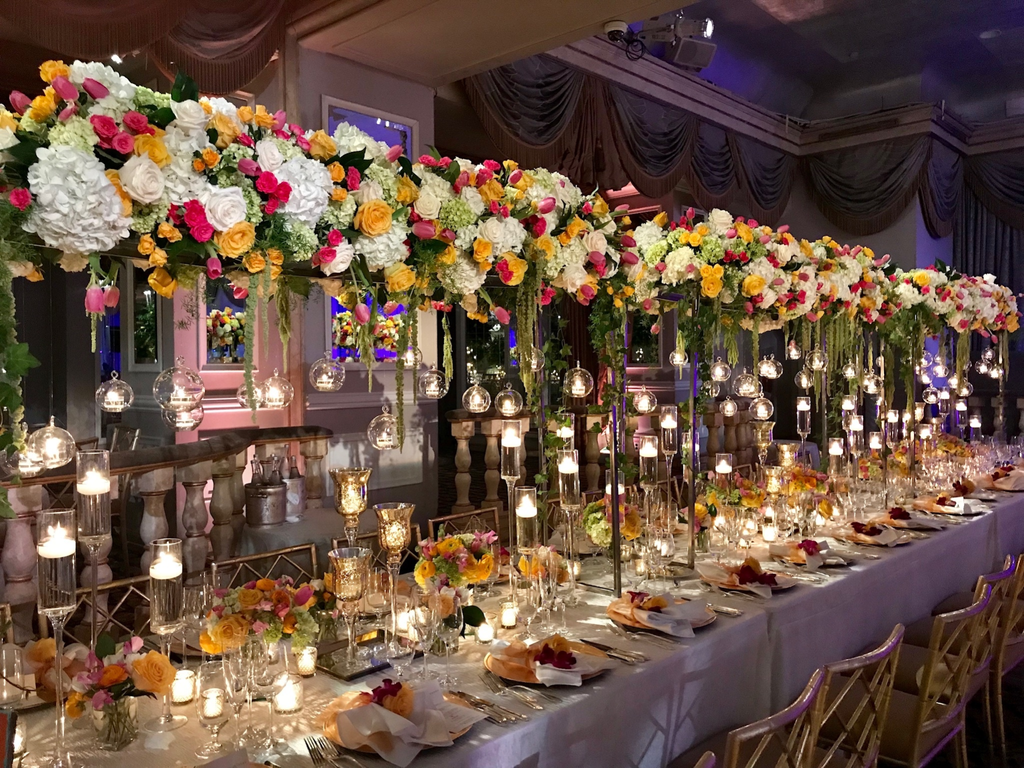
When a specific flower is unavailable, unsuitable for the weather, or not right for the venue, the design does not have to lose its direction. A thoughtful substitution can preserve the role the flower was meant to play. Garden roses can bring fullness and romance. Branches can add height and architecture. Amaranthus can add movement and drama. This is why flexibility is not a compromise. It is often what protects the final design.
A More Thoughtful Way to Choose Wedding Flowers
Seasonal flowers should be part of the design conversation, not a fixed recipe. They do not automatically make a wedding less expensive, and an inspiration image may include flowers from different seasons, regions, or sourcing channels.
If a flower becomes unavailable or unsuitable closer to the wedding, a designer should still protect the larger intention: the palette, texture, scale, and emotional quality of the flowers.
The strongest floral designs begin with feeling, then translate the season into an environment: the ceremony, tables, room, lighting, and atmosphere of the day. When the season, venue, and design direction work together, flowers feel as though they belong to the event. That is the difference between selecting flowers and designing with them.