

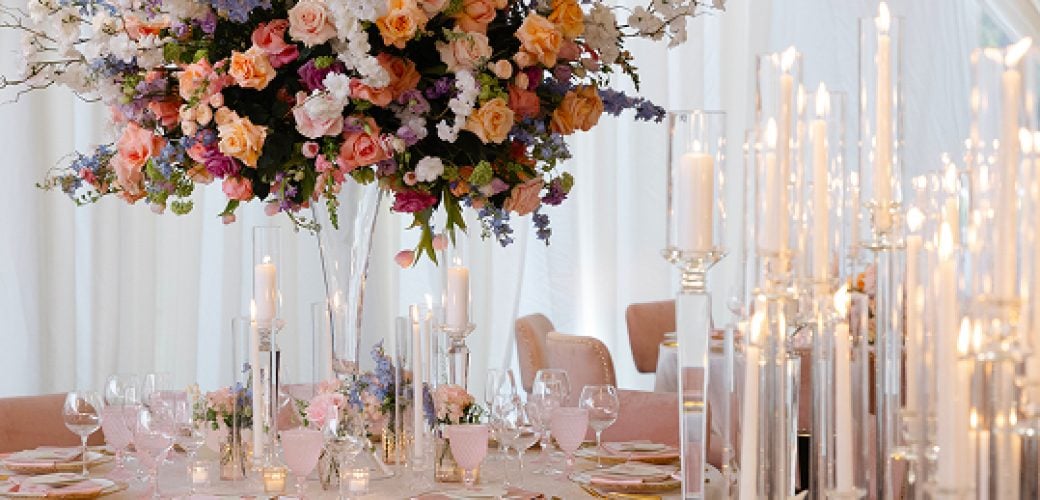
To many people, a florist and an event designer sound like two names for roughly the same role. Both live in the world of celebrations, aesthetics, and beautiful environments, so the difference is easy to overlook from the outside. In practice, the difference is not minor at all. It shapes who is responsible for what, how decisions are made, and whether an event ultimately feels cohesive, intentional, and complete.
A florist is responsible for flowers. An event designer is responsible for the complete visual and emotional environment of an event. The difference is not about status or semantics. It is about scope. When that difference gets misunderstood, a room can have beautiful flowers, look expensive, and still feel disconnected or fail to tell one complete story.
In most cases, that is not because the florals were unsuccessful. It is because no one was shaping the entire environment with one point of view. That is the difference this article explores: what a florist is responsible for, what an event designer brings to the table, when each role makes sense, and what ultimately turns a well-designed event into a truly exceptional one.
Flowers Are Only One Part Of The Story
Floristry is a real craft, a meaningful one, and far more nuanced than many people realize. A great florist can bring beauty, softness, movement, and joy into a space in a way few other design elements can. That work can include bouquets, centerpieces, arrangements, installations and in some cases, greenhouse pieces. . Flowers matter enormously. They set the tone. They create emotion. They can transform a table, an entrance, a ceremony, or a room.
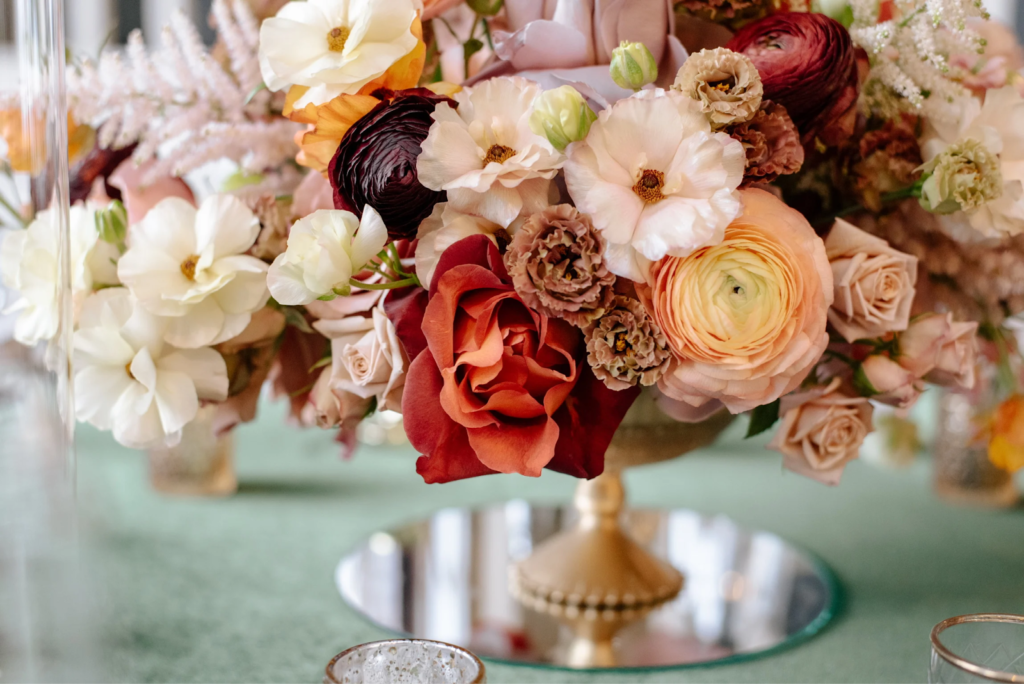
However, that scope usually ends at the flowers themselves. A florist is not typically responsible for the lighting temperature, the scale or styling of furniture, the selection & tone of the linens, the visual weight of a bar, or the way guests will move through a space from one moment to the next. Those decisions are crucial in l shaping how an event feels. Lighting changes the mood. Linens can sharpen or soften formality. Furniture affects proportion, comfort, and the way a room visually breathes. Guest flow determines whether the experience feels graceful and intuitive or crowded and awkward.
None of those things are minor. They are part of the atmosphere people absorb whether they realize it or not, and that is where the difference begins. A florist can create something beautiful within a room. An event designer is the one who thinks about the room & environment as a whole and works to create an immersive experience.
Event Design Begins Long Before Flowers Or Decor
For an event designer, the first thing to understand about an event has nothing to do with flowers or furniture. It is to consider how it should feel. How it should flow and what kind of emotional experience should begin the moment someone walks in.
Most clients never see that layer of the process. They think design begins with choosing colors, rentals, or decorative pieces. It does not. It begins with atmosphere. Until that is clear, design decisions are only decoration without a point of view.
I once had a client describe a 50th birthday as wanting to feel like a prom. It was such a specific and unexpected idea, but the emotional direction was immediately clear: youthful, nostalgic, excited, a little theatrical, and full of anticipation. Once that feeling was established, the rest of the design began to fall naturally into place, from the lighting and music cues to the color story, the textures in the room, and the overall sense of arrival.
Strong design ideas do not begin as isolated objects. They emerge through emotional logic. The room, the layout, the pacing of the evening, the scale of the elements, the surfaces, the lighting, the details on the tables…..all of it starts to make sense once the feeling is right. That is what allows an event to feel fully imagined rather than simply decorated.
What Event Design Includes Beyond Flowers
Once an event is designed around feeling, flow, and atmosphere, the design inevitably expands beyond florals. It can include scenic design, custom backdrops, specialty food stations, bar build-outs, furniture, fabric drapery, transformative dance floors, linens, tabletop details, candlelight, props, vessels, lighting, and so much more.
An event designer develops a full visual concept in-house, builds decorative and experiential environments around food and entertainment moments and styles a room so that everything from the lounge seating to the glassware feels like part of the same story.
In one setting, the role may involve draping a venue to soften or streamline the architecture, using uplighting or patterned lighting to create atmosphere, or layering textiles and candleware to bring warmth and richness to a table. In another, it could mean creating lounge areas that feel designed rather than furnished, or developing custom walls, statement bars, themed installations, and specialty stations that help define the overall experience.
An event designer must also understand the technical side of what appears effortless. A floral treatment suspended over a dance floor is never just flowers. It is structure, support, rigging, weight, balance, safety, and execution within the realities of a specific venue. Some of the most delicate-looking installations depend on the most disciplined behind-the-scenes planning. That invisible layer is part of the work too.
This is why event design is not only broader in scope, but also more interconnected. Every element has to function within one visual language. A room does not feel cohesive simply because it contains beautiful things. It feels cohesive when those things relate to one another in scale, tone, texture, proportion, and mood.
| Aspect | Florist | Event Designer |
| Primary responsibility | Floral design and floral execution | Complete visual and emotional environment |
| Starting point | Flowers and floral expression | Feeling, flow, atmosphere, and guest experience |
| Scope of work | Bouquets, centerpieces, arrangements, installations, and floral styling | Florals, lighting, furniture, linens, drapery, scenic design, custom builds, props, and spatial cohesion |
| Focus | Beauty within the floral elements | Cohesion across the entire room |
| Role in the space | Enhances the environment | Shapes the environment as a whole |
| Technical demands | Floral mechanics and floral production | Design direction, technical production, structural planning, and cross-vendor coordination |
| Best fit | Focusing solely on florally driven elements | Events with many moving design parts and a need for one clear point of view |
How An Event Designer Brings The Whole Design Together
What separates a complete event from a fragmented one is ownership. When florals, lighting, linens, furniture, and scenic details are all being handled separately, someone still has to be responsible for how those decisions connect, how they affect one another, and whether the room ultimately feels whole. Without one design lead carrying that responsibility, an event lacks an accountable point of view.

When different vendors each handle their own piece of the design, they interpret the same vision through different materials and different instincts. One person’s green, for example, could be different from another person’s green. These are the kinds of problems that arise when everyone is making decisions inside their own medium without one authority translating all of it into a single visual language.
Everyone may work in good faith. Everyone may be technically sound. But when one person thinks in fabric, another in flowers, another in paint, and another in lighting, the room can still end up telling several different stories at once, which may not feel cohesive in the end.
Another important aspect is the budget. When no one oversees the full picture, vendors can overlap in scope, responsibilities become blurry, and clients can end up paying for effects or services that were already being provided elsewhere. What looks, at first, like flexibility can easily become redundancy, and redundancy is expensive.
An event designer protects against that fragmentation. The role is not simply to have a vision, but to translate that vision consistently across every medium involved so the guest experience feels cohesive rather than pieced together.
When To Choose A Florist Over An Event Designer
There are situations where choosing a florist over an event designer makes perfect sense, especially when the event is:
- small in scale
- taking place at home or in an already well-resolved setting
- a very small wedding or intimate celebration
- mainly focused on floral details rather than a fully built environment
- using a venue that already provides basics like foundational elements
- intentionally simple in its overall visual direction
The design variables in such cases are relatively contained, the environment does not need to be fully transformed, and flowers may be the primary expressive layer the event requires. In those situations, a talented florist may be the right choice. This is not because the work requires less skill, but because the event’s visual needs may not extend beyond what a talented florist handles beautifully.
Choosing between a florist and an event designer is not simply a question of budget. It depends on how many design variables are in play. When the scope is genuinely simple and contained, a good florist may take wonderful care of it.
What Separates A Well-Designed Event From A Truly Exceptional One
A truly exceptional event goes further to reflect a level of expertise and finesse in which every detail has been carefully considered, not only for how it looks on its own, but for how it contributes to the experience as a whole. That difference often comes down to the ability to hold the big picture and the small picture at the same time.
The big picture is what makes people lose their breath when they first walk into the room. It creates the atmosphere, the scale, and the emotional force of the environment. In a wedding, that might be the first full reveal of the room: the height of the floral installation, the glow of the lighting, the sweep of the drapery, and the way the entire space immediately feels romantic, immersive, and grand.
The small details do something quieter, but no less important. They are what warm the heart and touch the soul when guests begin to notice the layers more closely, from the texture of the table to the glow of the candlelight to the subtle way one gesture supports the next. It might be the way a napkin, menu card, and floral accent sit together beautifully at a place setting, or the way a candlelit bar, a custom vessel, or a carefully chosen fabric finishes the room with a sense of thoughtfulness and care.
What makes an event feel exceptional is not only the design itself, but the level of oversight behind it. When the details have been thought through with real care, and when the design team is managing the environment attentively from concept through execution, the result feels complete, and the overall experience carries the quiet assurance that everything belongs.
What is the difference between a florist and an event designer?
A florist is responsible for flowers. An event designer is responsible for the complete visual and emotional environment of an event, including lighting, furniture, linens, drapery, scenic design, and the way every element relates to every other. The difference is one of scope.
Can a florist design my whole event?
A talented florist can create beautiful floral work, but their scope typically ends at the flowers themselves. Decisions about lighting, furniture scale, guest flow, and spatial cohesion fall outside that scope. When those elements go unmanaged, a room can look expensive and still feel disconnected.
When should I hire an event designer instead of a florist?
When your event involves multiple design variables that need to work together: lighting, linens, furniture, florals, drapery, custom builds, a single design authority is what keeps the result cohesive. For smaller, simpler events where florals are the primary expressive layer, a florist may be the right fit.
How does an event designer protect my budget?
An event designer oversees the full design picture, keeping every vendor’s responsibilities clearly defined and separate. Without that oversight, scopes can overlap in ways that go unnoticed, services get duplicated, and clients end up paying for effects already being provided elsewhere.