


Centerpieces shape how guests see one another, how the room feels when people walk in, how the table photographs, and how everything on the table works together.
A low arrangement, a tall floral statement, a row of bud vases, or a suspended installation can all be beautiful, but they do different things. Some keep the experience close to the table. Some draw the eye upward. Some create rhythm across a long table. Some move the floral moment overhead and leave the tabletop open.
A centerpiece is not meant to be seen in isolation. It sits within a tablescape that includes linens, chargers, glassware, candles, menus, table numbers, and place settings. Each affects how the whole table reads.
Low and Compote Centerpieces
Low centerpieces sit close to the tabletop. They keep the table feeling open, intimate, and conversational while still allowing flowers to create softness, color, and texture at guest level.
Low does not mean simple. A low arrangement can feel garden-like and relaxed, or refined and composed, depending on the vessel, flowers, palette, candlelight, and surrounding tabletop details.
A compote arrangement is a refined type of low centerpiece. It is usually designed in a footed vessel, giving the flowers lift without turning the arrangement into a tall design. Compotes can feel romantic, dimensional, and grounded.

These styles are useful when the goal is to keep attention on conversation, candlelight, linens, and the details guests notice while seated.
Tall and Elevated Centerpieces
Tall centerpieces create vertical presence. They can help a large room feel fuller, add drama to a room reveal, and draw attention toward architecture, ceiling height, or lighting.
Height is not automatically more luxurious. It is useful only when it serves the room. In a grand ballroom, a tall arrangement may help balance the scale. In a more intimate room, the same idea may feel heavy.
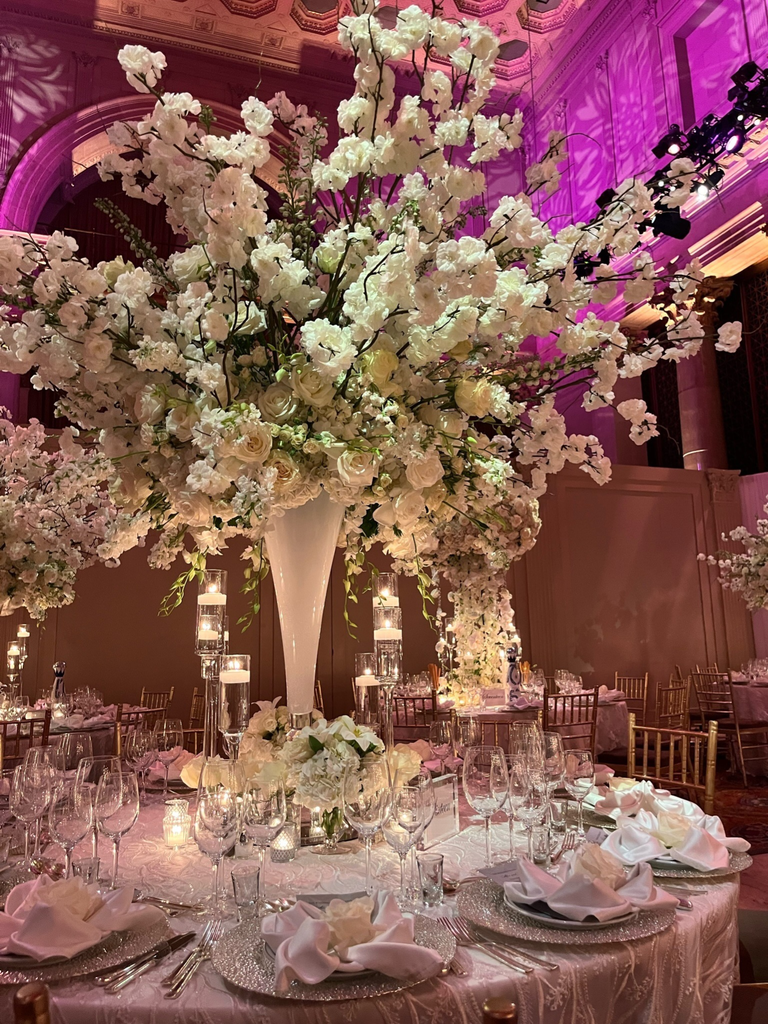
Elevated centerpieces may use a stand, pedestal, or architectural base instead of a traditional tall vase. This can create a cleaner, more sculptural feeling while keeping the table below open and layered.
Sightlines matter. A well-planned vertical design can preserve conversation, but a poorly scaled one can interrupt the table experience.
Clustered, Bud Vase, and Runner-Style Designs
Not every centerpiece needs to be one central arrangement. Some tables are better served by smaller elements that work together.
A clustered centerpiece uses several pieces to create one layered tabletop moment. This might include small floral arrangements, candles, vessels, or decorative accents. The effect is collected rather than singular.
Bud vase groupings are lighter and more deconstructed. Each vessel may hold a few stems or a single floral gesture, allowing the linen, candles, and place settings to remain visible.
Garlands and runner-style arrangements create a continuous line, usually down the length of a long table. They can be greenery-forward, floral-heavy, or restrained, but their main role is movement and connection.
These styles still need proportion. A runner that is too full can crowd the table. One that is too sparse can feel unfinished.
Suspended, Candle-Forward, and Mixed-Height Designs
Some centerpiece decisions extend beyond the tabletop.
Suspended arrangements are the clearest example. They are not simply tall centerpieces moved overhead. They change the architecture of the room by bringing flowers, greenery, or decorative elements into the space above the tables.
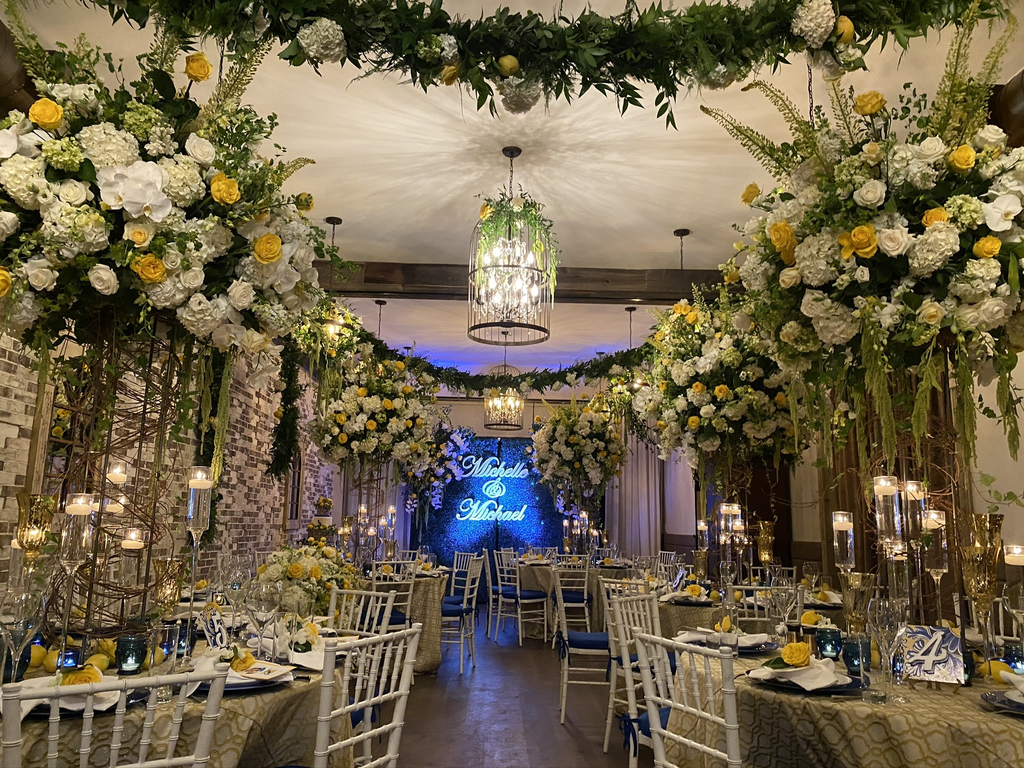
Because suspended designs affect the venue itself, they require venue approval and qualified professionals. From a design perspective, their value is clear: they free the table surface, create overhead atmosphere, and make the room feel more transformed.
Candle-forward centerpieces work differently. Their primary material is light. Flowers may still be present, but the mood comes from glow, reflection, and warmth.
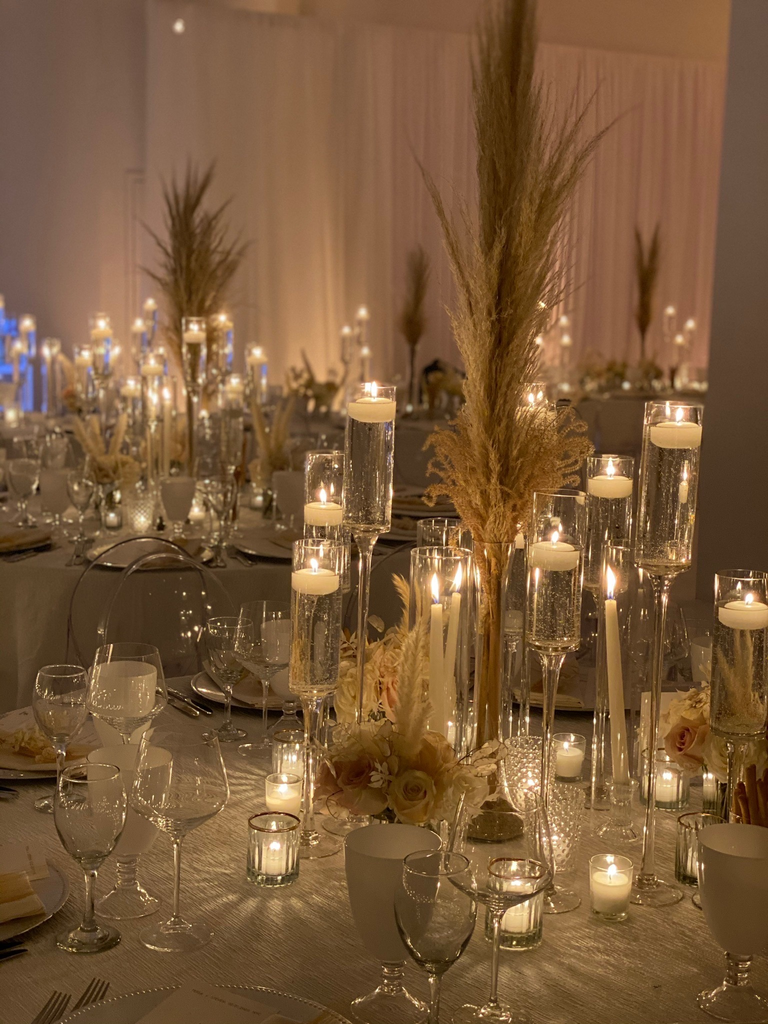
Mixed-height designs bring several approaches into one room. Some tables may have low arrangements, some taller pieces, some candlelight, and some clusters. When planned well, this creates rhythm rather than repetition. The key is cohesion: the palette, vessels, candles, linens, and floral language need to feel connected even when the heights vary.
How to Choose a Centerpiece Direction
Choosing a centerpiece style is not only about liking a photo. Inspiration images rarely show the full reality of the event: table size, ceiling height, service style, candle policies, flower season, rental plan, or the space guests need to dine comfortably.
The strongest designs translate inspiration rather than copy it. Understand why a table works, then adapt that feeling to the actual venue, guest count, table layout, season, and event atmosphere.
A better place to begin is the room and the table. Round tables need different thinking than long tables. A ballroom asks different questions than a tent, loft, private home, or club.
Sightlines matter because the table is not only meant to be seen. It is meant to be used. Guests need to talk, reach for glasses, see across the table, and feel comfortable during the meal.
Lighting also changes every centerpiece style. Flowers can recede in a dim room if they are not properly lit. Candlelight can make a low table feel warm and intimate. Vertical arrangements gain presence when the room lighting supports them.
Linens, chargers, glassware, menus, table numbers, and place settings are part of the same visual field. The centerpiece should sit within that composition, not compete with it.
A More Complete Table Design
The right centerpiece style is not simply the one that looks best in a photo. It is the one that belongs with the table, the room, the lighting, and the way guests will experience the event.
Low, tall, clustered, suspended, candle-forward, and mixed-height designs are not isolated choices. They are tools for shaping the table, supporting the room, and making the event feel complete.