


Candlelight changes the way an event room feels before most guests can explain why. It softens the table, warms the flowers, catches in the glassware, and gives the room movement once the overhead light begins to fall away.
Candles are not just decorative extras. They belong to the same design conversation as flowers, linens, tabletop, lighting, and the way guests experience the room.
Yet candle language can be confusing. There are many options: hurricane candles, lantern candles, votives, tapers, pillars, and floating candles. Some terms describe the candle itself, while others describe the holder around it, which is why knowing basic event design terms can be useful.
Candle Type and Holder Are Two Different Decisions
The candle is the source of flame or glow: a votive, tealight, pillar, taper, floating candle, or flameless candle. The holder is the vessel, stand, sleeve, lantern, cylinder, or candelabra that supports and shapes that light.
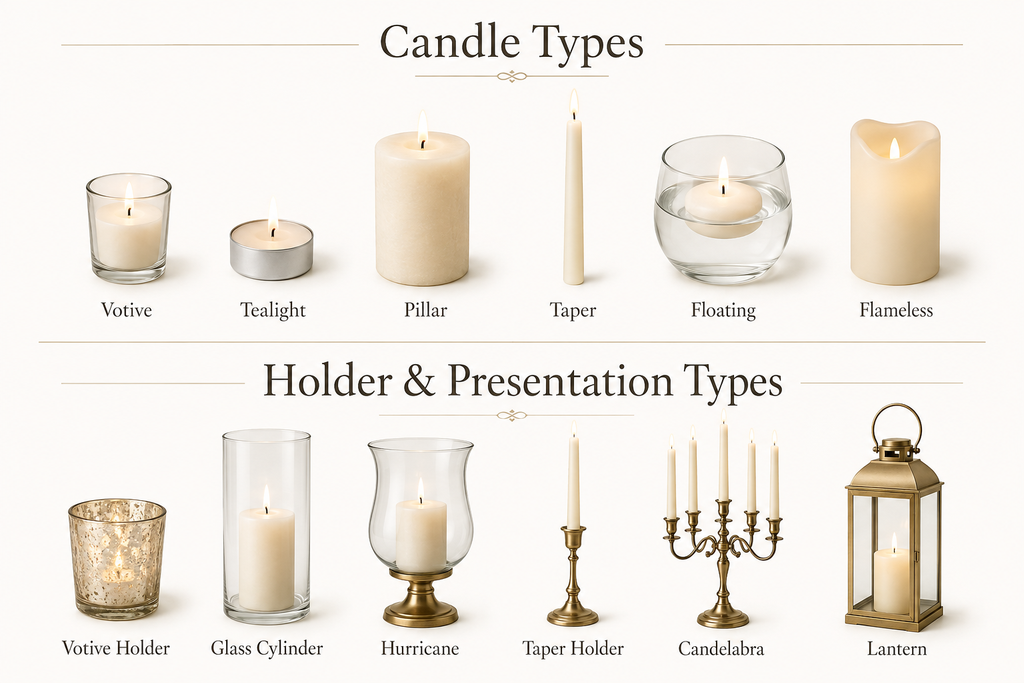
The holder can change the design as much as the candle itself. A taper in a slim brass candlestick feels different from a taper inside a clear glass sleeve or tall candelabra.
Sometimes holder terms are used loosely. A “hurricane candle” usually means a candle inside a glass cylinder. A “lantern candle” means a candle inside a lantern. A better question to ask: what light, height, reflection, and presence should the table have?
The Main Candle Types and What Each One Does Visually
Votives and tealights both sit low on the table, but they are not quite the same. A votive is usually more substantial and used inside a holder. A tealight is smaller and often reads as a point of accent light.
Pillar candles are wider and more solid. They have more physical presence than votives or tapers and can anchor a composition. Pillars often appear inside glass cylinders, hurricanes, lanterns, or grouped at varying heights.
Taper candles are tall and slender. Their design strength is vertical rhythm. A row of tapers down a long table creates a fine line of light. On a round table, a few tapers add lift without much bulk, especially with low floral centerpieces.
Floating candles sit on water, usually inside bowls or glass cylinders. Their effect comes from reflection: flame, water, and glass create a softer, more luminous look. It is different from a dry pillar inside glass.
Flameless or LED candles can be thoughtful when real flame is not right for the room, venue guidelines, outdoor conditions, or guest movement. They are not a downgrade by default, and not identical to real flame. Quality, holder choice, distance, and room lighting affect how natural they feel.
| Candle type | What it contributes visually | Often paired with |
| Votives | Low, warm glow | Small glass holders, low florals |
| Tealights | Small accent light | Tealight cups, lanterns, secondary details |
| Pillars | Weight and grounded glow | Hurricanes, cylinders, lanterns |
| Tapers | Height and rhythm | Candlesticks, sleeves, candelabras |
| Floating candles | Reflection and water-softened light | Bowls or glass cylinders |
| Flameless candles | Consistent glow | Holder depends on design |
The Holders That Change the Look
If the candle creates the glow, the holder gives that glow its shape.
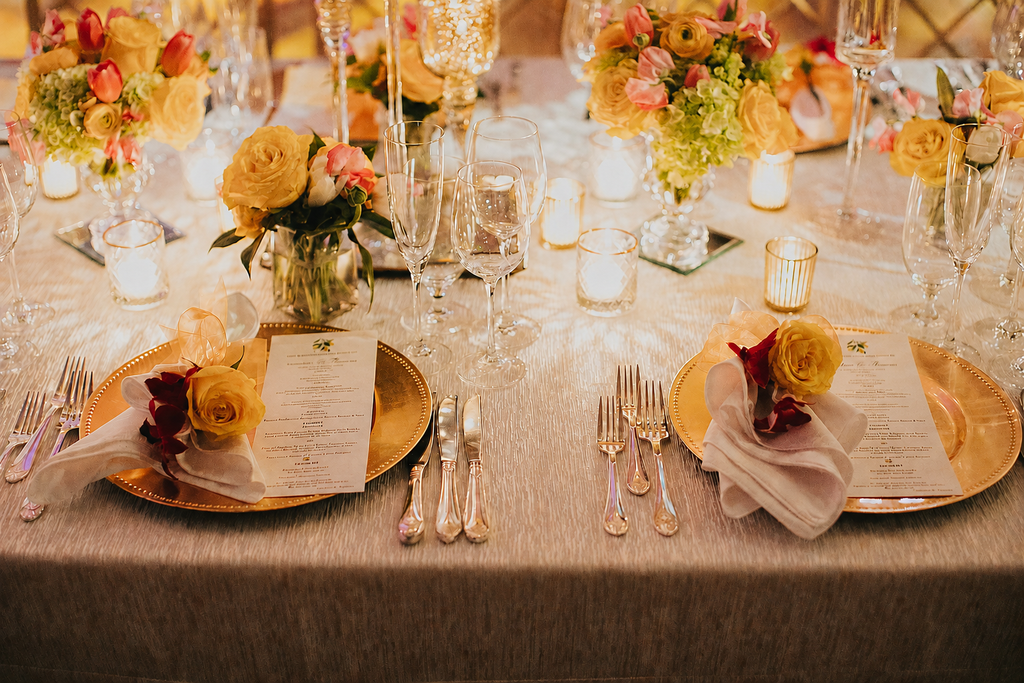
Small glass cups, including votive and tealight holders, keep light close to the table surface. Clear glass feels simple and clean. Textured, colored, or mercury glass adds shimmer.
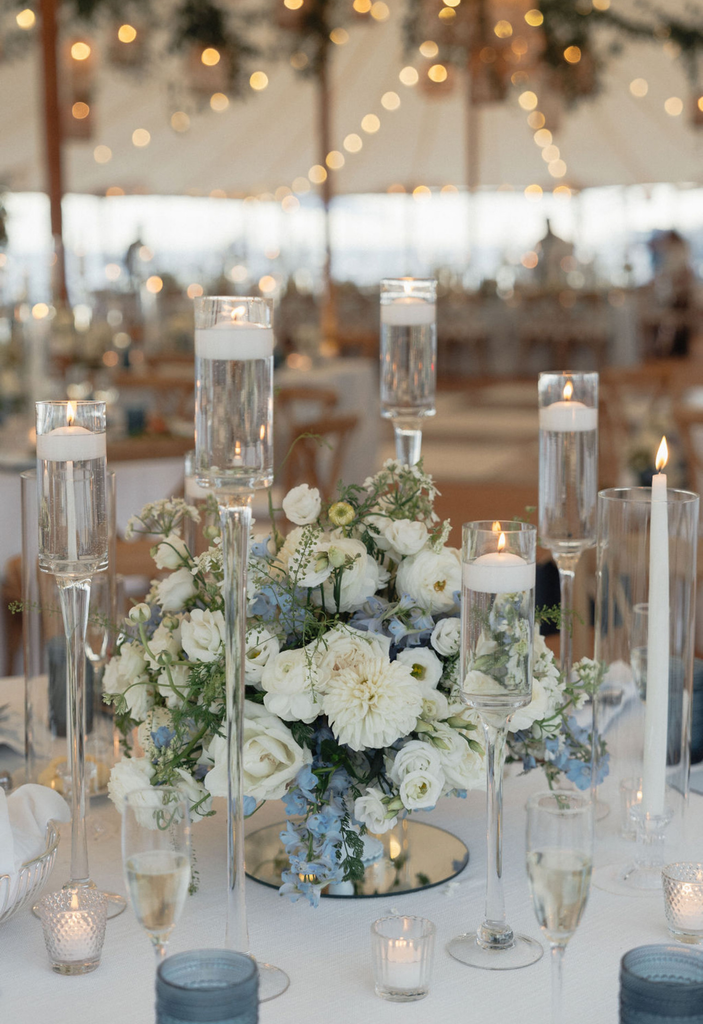
Glass cylinders and hurricanes add structure. They can hold pillar candles, floating candles, or surround tapers as a sleeve. In event terminology, “hurricane” and “cylinder” often overlap. What matters is the glass column, height, and reflection.
Candlesticks and taper holders are single-candle supports. Brass, silver, black metal, crystal, ceramic, or glass can each shift the mood. A cluster of different-height candlesticks feels collected and rhythmic. Matching holders feel more formal.
Candelabras create one larger candle statement. Because several tapers share one structure, a candelabra can bring height and repetition without many separate holders. Scale, finish, and shape decide whether it feels traditional, modern, dramatic, or restrained.
Lanterns are more architectural. The frame is part of the design. They often appear at entries, aisles, bars, lounges, patios, and outdoor spaces.
Sometimes a mixed-height grouping works better than one holder type alone. Combining low votives, taller tapers, pillars, cylinders, or lanterns gives the table rhythm rather than one repeated line of light.
How Candlelight Works With the Whole Table and Room
Candles work best when planned with the full table in mind. A plan that looks beautiful on an empty table may feel crowded once chargers, glassware, menus, bread plates, florals, and service pieces are added.
Table size affects what fits. A smaller round table may need a tighter candle language than a long rectangular table. A mantel, bar, or entry table can often carry a stronger grouping because it is not competing with dinner service.
Height also matters. Low votives create a ground layer of glow. Tapers and candelabras add lift. Pillars and cylinders create weight and presence. When every object sits at the same height, the table can feel flat. When too many occupy the same visual space, it can feel busy.
More candles are not automatically better. Glow comes from placement, repetition, proportion, and surrounding light. Candles also do not replace professional event lighting. They create warmth at table height, but they do not fully light the room, flowers, architecture, dance floor, or guests’ faces.
Candlelight Works Best When It Belongs to the Whole Design
The right candle plan is not only about choosing candle types. It is about how those choices work with holders, flowers, linens, glassware, table size, venue, and lighting.
When candlelight is planned as part of the full event environment, it does more than decorate the table. It adds warmth, rhythm, reflection, and atmosphere because every element is doing its job.