


Before the flowers, candles, menus, and glassware are added, the linen has already shaped the table. It sets the color field, softens the edge, affects how the chairs are seen, and helps determine whether the room feels clean, romantic, relaxed, formal, or layered.
The choice of linen size is more than a rental detail. A 120-inch round or a 90-by-156-inch rectangle may sound technical, but the real question is visual: how should the fabric fall, and what should it do for the table?
Linen Terms That Shape the Table
The most important linen term is drop. Drop means how far the fabric hangs from the tabletop toward the floor. The linen needs to cover the surface and still have enough fabric to fall from the edge. For round tables, the starting point is the table’s diameter. For rectangular tables, it is the length and width. Table height matters too, because dining and cocktail-height tables do not use fabric in the same way.
A lap-length or partial-drop linen falls partway down the table and leaves more of the chair, table legs, or floor visible. A floor-length linen reaches closer to the floor and creates a more finished line. A puddled or pooled linen goes beyond that, allowing extra fabric to gather softly at the base.
Other pieces add layers. An overlay sits over a base linen to introduce color, texture, pattern, or shape. A runner creates a line down the table, often on long tables or exposed wood surfaces. A fitted or stretch linen creates a tailored look, often for cocktail, display, or specialty tables. Napkins also connect each place setting back to the overall palette.
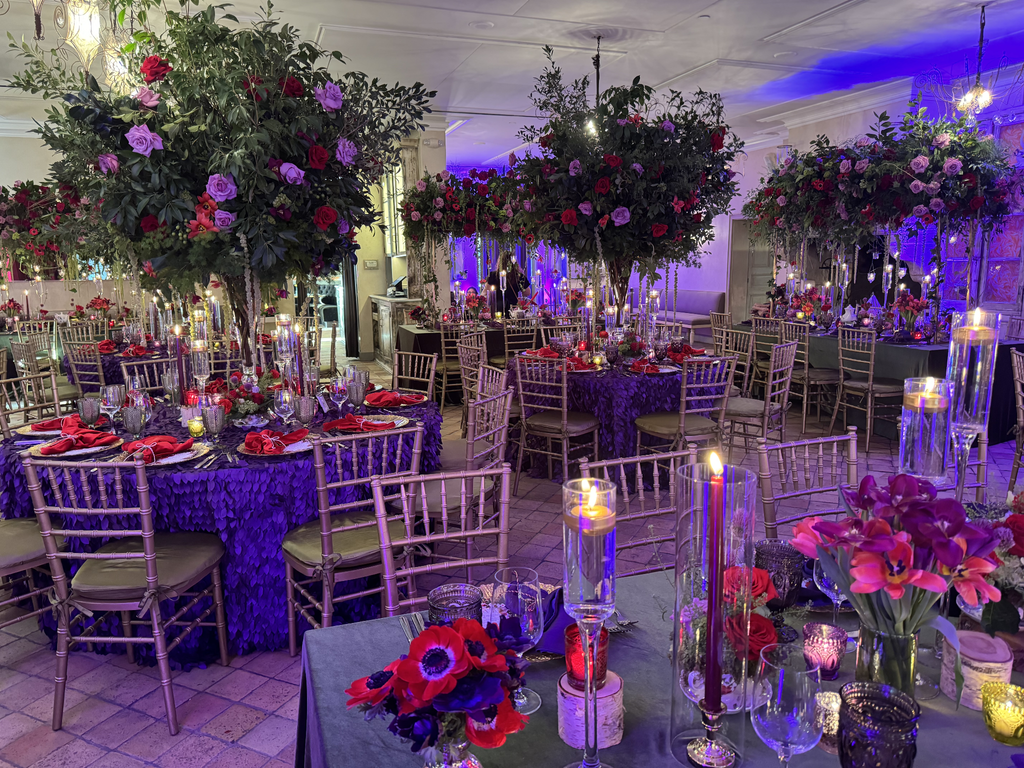
A Simple Linen Size Guide for Common Tables
The chart below offers common planning references. Final linen size still depends on the exact table dimensions, height, desired drop, fabric, and rental inventory.
| Table Type | Common Floor-Length Linen | Other Common Options | Design Note |
| 48-inch round | 108-inch round | 90-inch round | Smaller tables. |
| 60-inch round | 120-inch round | 90- or 108-inch round | Common reception pairing. |
| 66-inch round | 120- or 132-inch round | 108-inch round | Inventory varies. |
| 72-inch round | 132-inch round | 108- or 120-inch round | Needs proportionate fabric. |
| 6-foot banquet table | 90-by-132-inch rectangle | 60-by-120-inch rectangle | Guest, buffet, or display use. |
| 8-foot banquet table | 90-by-156-inch rectangle | 60-by-120-inch rectangle | Longer linear layouts. |
| Cocktail/highboy table | 120- or 132-inch round, or fitted cover | Varies | Styled differently from dining tables. |
| Estate, farm, or feasting table | Varies | Runner, partial coverage, or bare table | Surface may be part of the design. |
| Sweetheart table | Varies | Floor-length, puddled, overlay, or custom | Usually a focal table. |
This chart is a starting point, not the final answer. Two tables may both be described as 60-inch rounds, but the linen decision can still change based on height, inventory, fabric, and the intended look.
How Drop Changes the Look of the Table
Drop changes the visual weight of a table. A floor-length linen creates a smooth line from tabletop to floor. It can make a standard rental table feel more finished and help create consistency across a large room.
A shorter drop reveals more of the table structure, chair shape, and floor. That can be useful when the design is lighter, more relaxed, or intentionally showing more of the furniture.
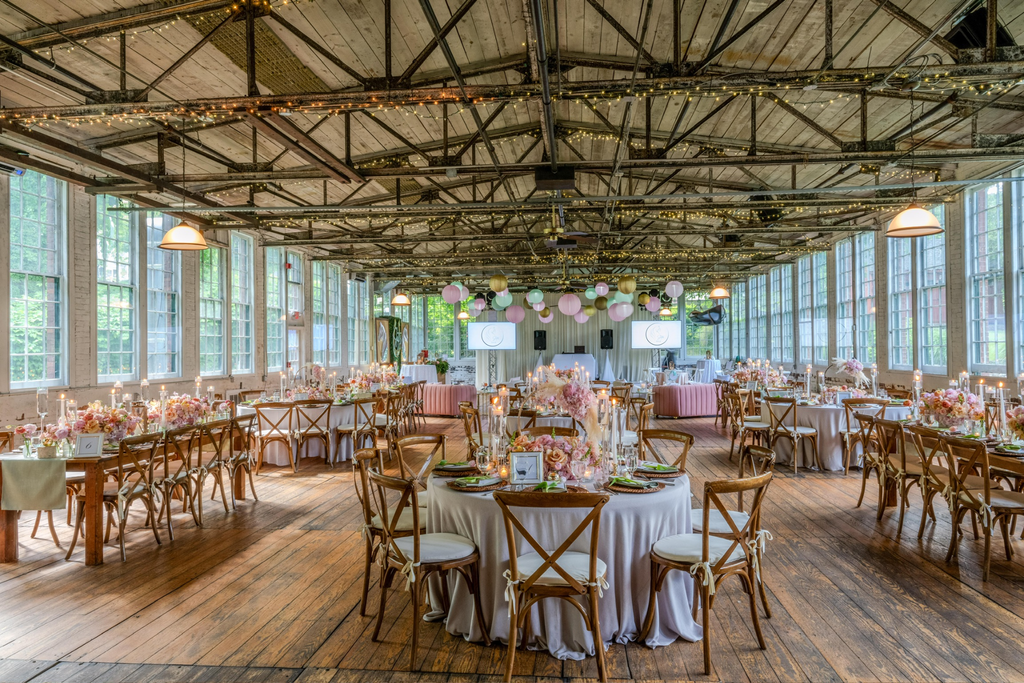
Puddled linen creates a softer and more dramatic effect. A sweetheart table, cake table, welcome table, or display table may call for more softness than a standard guest table.
Cocktail and highboy tables need separate thinking because they are taller than dining tables. Some look best with a draped effect, while others look cleaner with a fitted approach. The decision depends on the table, the room, and the role that area plays in the event.
None of these choices is automatically better. Floor-length, partial-drop, puddled, fitted, and bare-table approaches can all feel intentional when they support the larger design.
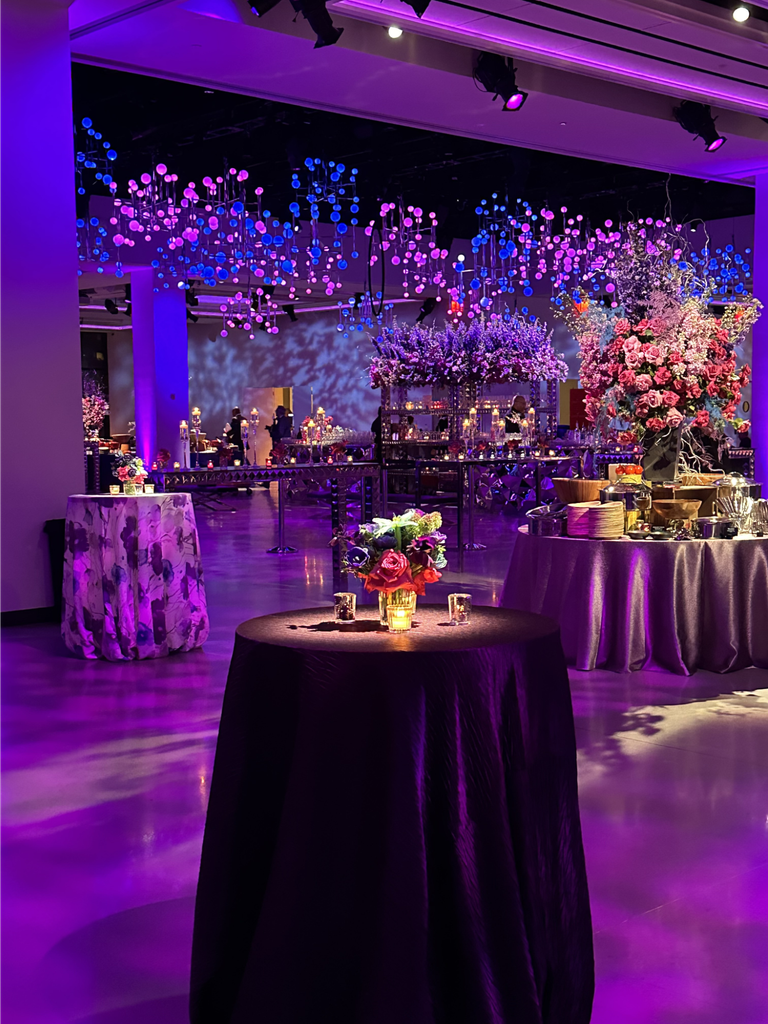
Linens as Part of the Tablescape
A linen frames everything that sits on the table: centerpiece, candles, glassware, chargers, menus, place cards, flatware, and napkins.
Color is one of the clearest examples. A pale linen can soften a room and let flowers and candlelight take the lead. A deeper linen can give the table more presence. A patterned or textured linen can add interest before any flowers are placed.
Texture also changes the feeling of the table. A smooth linen, woven texture, subtle pattern, or dimensional fabric will interact differently with candles, glassware, and floral color. Fabric changes how the rest of the table reads.
This is why linens should not be chosen separately from centerpieces, candles, chairs, or place settings. They belong to the same composition.
Runners, Overlays, and Bare Tables
Not every table needs a full cloth. An overlay adds a second layer over a base linen, bringing in pattern, texture, contrast, or a different shape. A runner creates a line down the center of the table and gives flowers, candles, and place settings a visual path to follow.
Bare or partially bare tables can also feel polished when the table surface supports the design. A beautiful wood table may not need to be fully covered. In that case, the linen decision may come through a runner, napkins, placemats, or another textile layer.
The important distinction is that a runner is not a universal solution. If the table underneath is not meant to be seen, a runner alone may leave the design feeling unfinished.
A Finished Table Starts With the Right Foundation
The right linen size is not simply the one that matches a chart. It is the one that fits the table, creates the intended drop, supports the floral direction, works with the chairs and place settings, and helps the room feel cohesive.
Once linen size, table shape, fabric, centerpieces, candlelight, and tabletop details are considered together, the linen becomes less of a rental detail and more of the foundation for the event design.