


Place Cards, Seating Charts, and Escort Cards: What Is the Difference?
When guests move from cocktail hour into the reception room, the first thing they need is direction. Before the flowers register or the candlelight settles in, guests are looking for where to go.
That moment is shaped by tools most people have seen but rarely think about deliberately: place cards, escort cards, seating charts, and table numbers. The terms are often used as if they mean the same thing, but each one does a specific job.
Understanding the difference helps clients make choices that affect not just stationery, but how the room fills, how service runs, and how the arrival moment feels. These pieces are part of the event design as much as logistics.
The Core Guest-Direction Tools
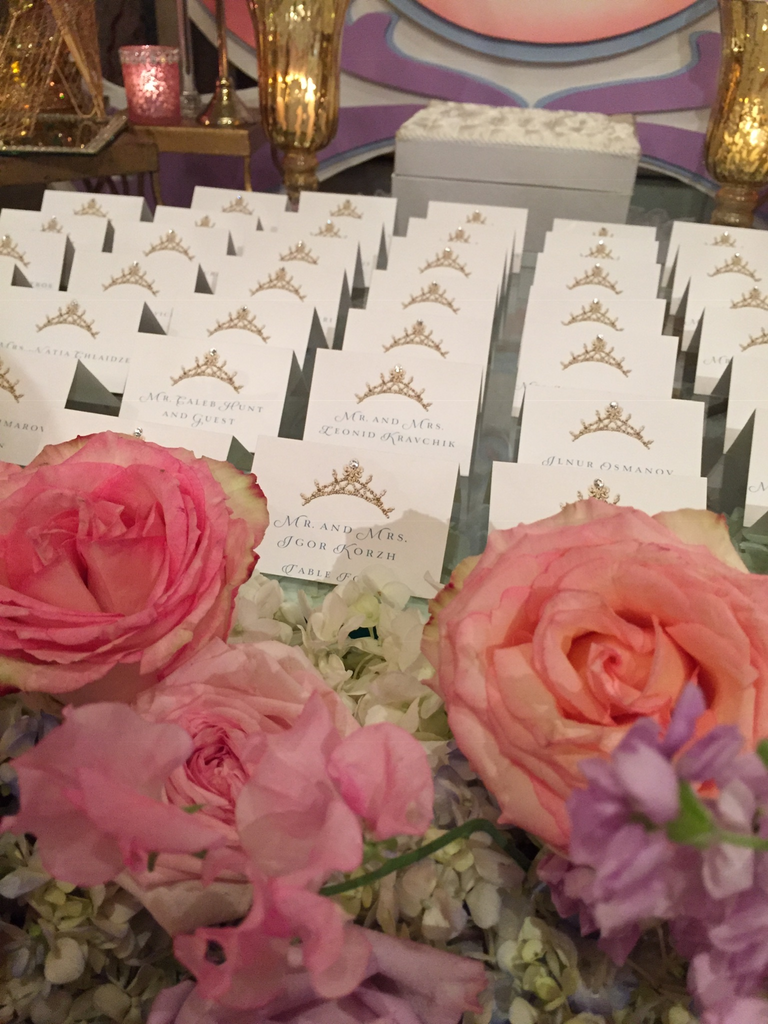
An escort card is an individual card or object displayed at the reception entrance, usually before guests move from cocktail hour into the dining room. Each card shows a guest’s name and assigned table. Guests take it with them. An escort card directs a guest to a table, not a specific seat.
A seating chart is a single large display, such as a framed board, mirror, acrylic panel, or similar installation. It lists guest names beside assigned table numbers or names. Guests find their name, note the table, and move on. Nothing is taken.
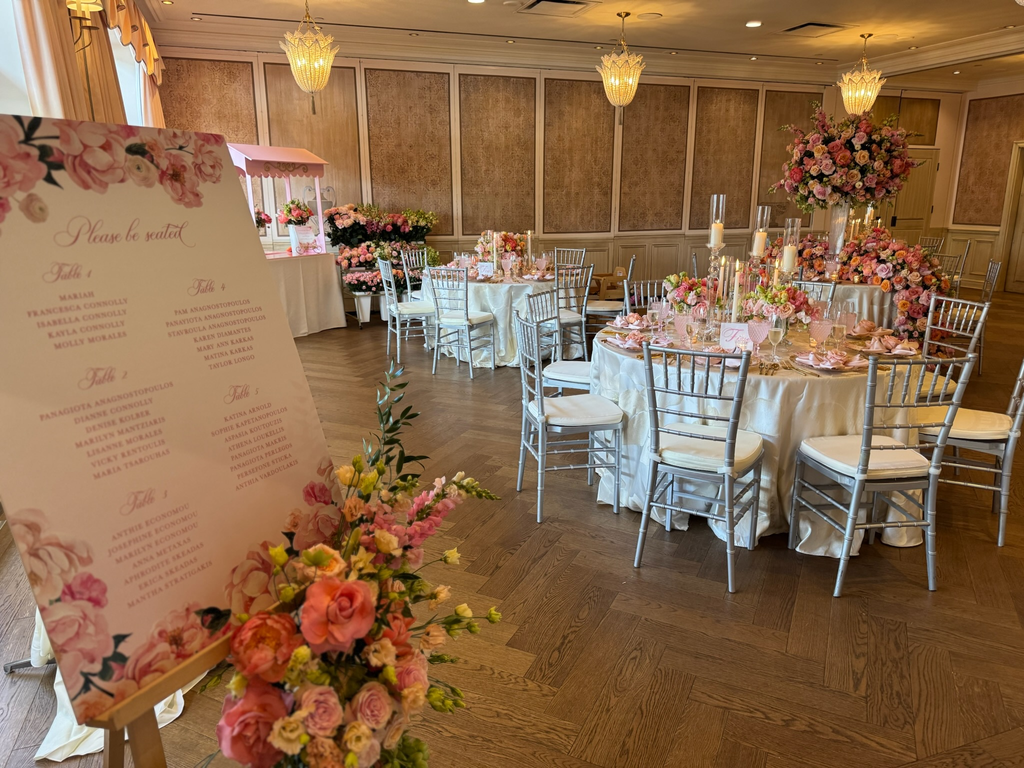
In most cases, a seating chart and escort cards solve the same problem: directing guests to their assigned table. The choice is about format, design preference, and the entrance area. Using both is usually unnecessary.
A place card is placed at each individual seat before guests arrive. It shows the guest’s name and marks a specific chair. It adds a second layer of direction after the guest reaches the table.
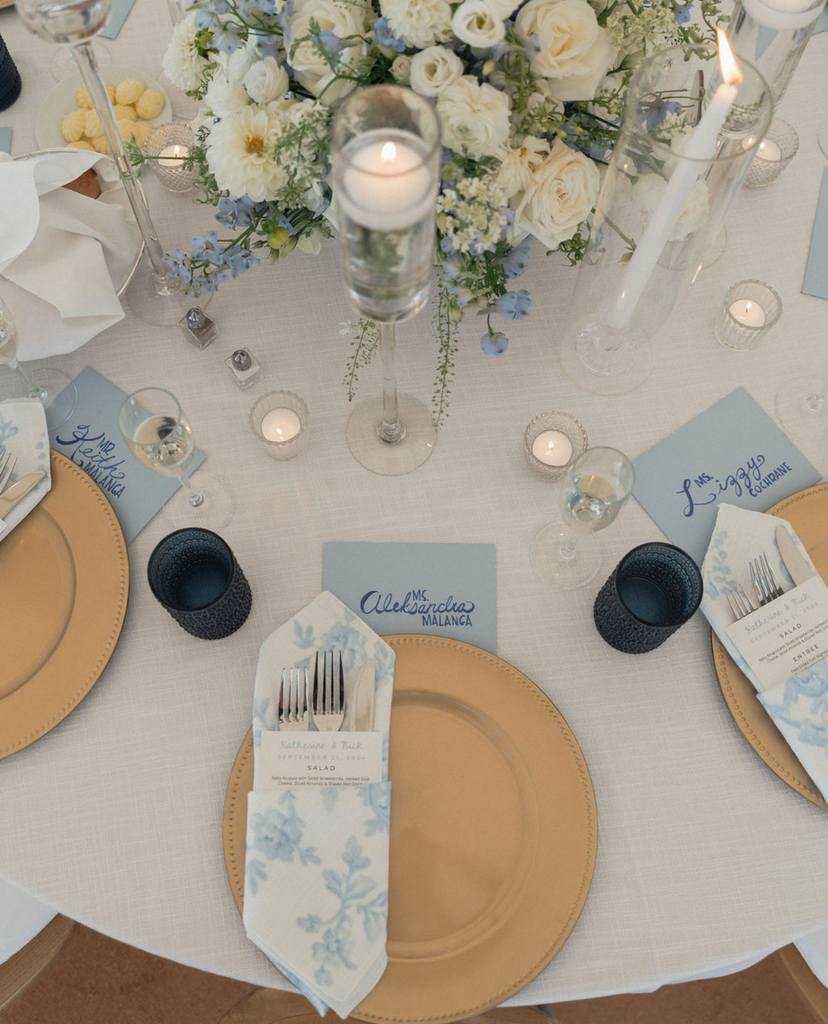
Table numbers identify each table in the room. The escort card or seating chart tells a guest which table they are assigned to; the table number shows them where that table is. Without table numbers, guests still have to search the room.

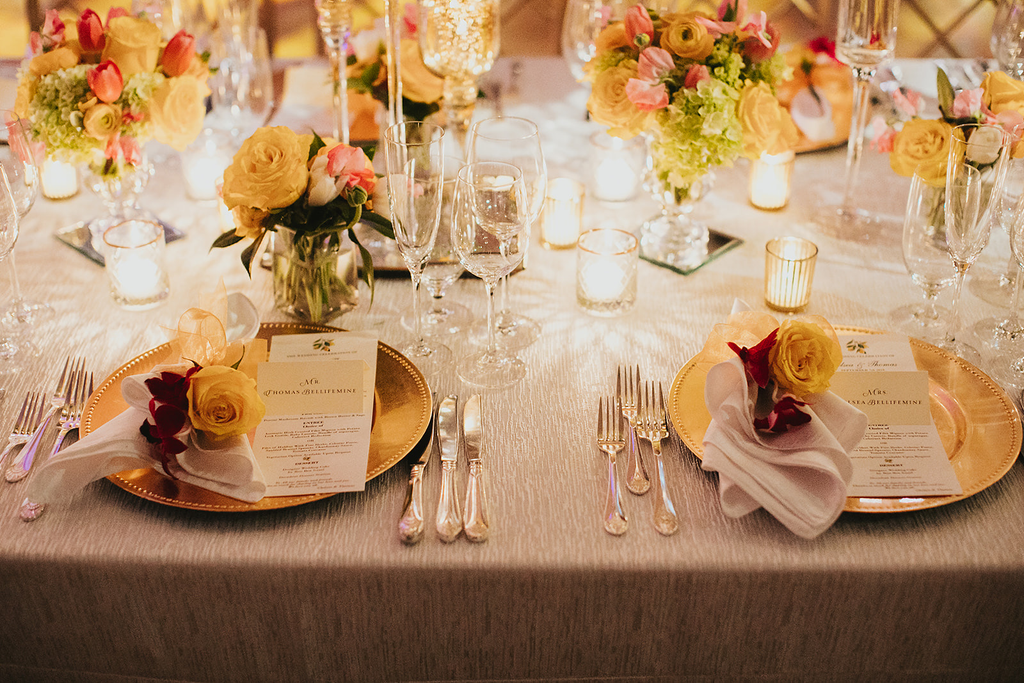
Menu cards inform guests of the meal courses and are usually coordinated with the rest of the table. A personalized menu, with the guest’s name printed or calligraphed at the top, can sometimes serve the place card function.
The table below summarizes the three main guest-direction tools:
| Tool | Where guests encounter it | What it directs guests to | Do guests take it? |
| Escort card | Entrance or cocktail area | A specific table | Yes |
| Seating chart | Entrance or cocktail area | A specific table | No |
| Place card | At the individual place setting | A specific seat | No |
Assigned Tables, Assigned Seats, and Open Seating
Assigned tables direct guests to a specific table through either escort cards or a seating chart, while allowing them to choose any available seat once they arrive. This gives the room structure without seat-level planning for every guest.
Assigned seats go one step further. Guests are directed to both a specific table and chair. This requires place cards at every setting in addition to the entrance display. It can help when meal service involves pre-selected entrées, or when specific placement matters.
Open seating lets guests choose any table and seat. It can work for smaller gatherings, cocktail-style events, or flexible seating. For larger seated dinners, the lack of direction can slow the transition, create uneven table distribution, and complicate service.
How Seating Tools Shape Arrival and Flow
The seating display, whether an escort card installation or large chart, is often the first design element guests encounter as they enter the reception. It sets the tone and orients the room.
Organization matters as much as appearance. Displays arranged alphabetically by guest surname allow people to find their name quickly. When names are grouped under table numbers instead, guests may need to scan through several lists. For larger groups, that can affect how smoothly the entrance flows.
When guests have pre-selected an entrée, a clear indicator on the place card can tell the server which dish belongs where. This should be agreed with the catering team before place cards are produced. The indicator should be simple, visible to the server, and quiet within the table design.
The planning team, venue, caterer, and stationer all work from a seating plan separate from what guests see. The guest-facing display works best as part of that system.
Seating Tools as Part of the Event Design
Escort displays and seating charts are design installations as much as logistical tools. They appear in arrival photography and shape the first impression of the reception. Their materials, typography, scale, and floral or structural details begin the design conversation.
Place cards and menu cards sit within the place-setting suite alongside the linen, charger, flatware, glassware, and centerpiece. When they coordinate with the table number and overall design language, the tablescape feels more cohesive.
Table numbers need to be legible from across the room without competing with the centerpiece, blocking sightlines, or dominating the place setting. That balance is a design decision as much as a practical one.
Readability is part of design quality. A beautiful display that is difficult to read creates the congestion it was meant to prevent. Type scale, contrast, and lighting all affect whether the display functions. These details show why professional event design goes beyond what guests see on social media.
Clear Seating Tools Create a Smoother Guest Experience
The best seating display is one guests use without noticing it. When the entrance display is clear, place cards sit naturally within the tablescape, and table numbers can be read from the entrance, guests move into the evening easily.
All of these pieces depend on a finalized guest list and coordination between the planning team, stationer, caterer, and venue. That coordination allows each piece to do its job, and allows the design to feel effortless when it comes together.