

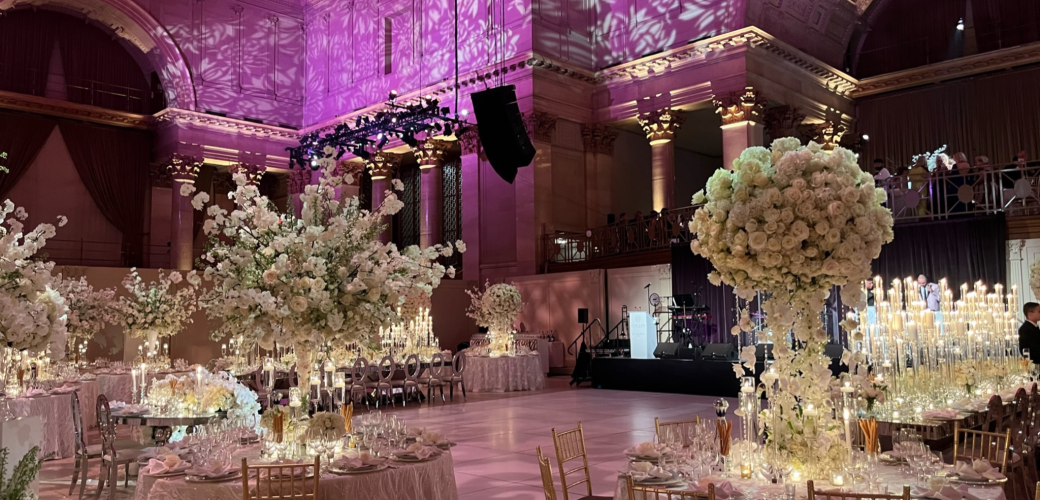
Lighting changes how an event room is understood. It can make flowers read more clearly, soften a dinner setting, give architecture more presence, or shift the energy when the evening moves from dinner to dancing.
Terms used around lighting can feel technical, especially when they appear in a proposal, venue walkthrough, or production conversation. But for a client, the useful question is what the light is meant to do for the room. This article explains common wedding lighting terms in plain design language, with the broader event design vocabulary as context.
The Lighting Terms Clients Hear Most Often
Uplighting usually refers to light placed low and aimed upward at vertical surfaces: walls, columns, draping, tent legs, trees, or architectural details. It can change the first impression of a room by giving those surfaces warmth, color, or definition. Uplighting does not automatically light the tables, faces, food, flowers, or dance floor.
A wash describes broader coverage. A wall wash, room wash, stage wash, or dance floor wash is meant to create a more even field of light across a surface or area. Uplighting can create a kind of wall wash, but a wash is not limited to uplighting. The terms overlap in vendor language, which is why it helps to ask what the light is actually meant to cover.
Pin-spotting is more focused. A pin spot is a narrow beam aimed at a selected detail, such as a centerpiece, cake, bar, escort display, sweetheart table, or sign. It can help a floral centerpiece remain visible once the room is dimmed. Very tall, branchy, unusually shaped, or hard-to-reach pieces may need a different approach, which the lighting partner can advise on.
A spotlight is a broader everyday term for focused light, often on a person giving a toast, a speaker, or a performer. In casual conversation, people may use “spotlight” and “pin spot” loosely, but in design terms the distinction is useful: a pin spot usually highlights décor; a spotlight usually highlights a person or stage moment.
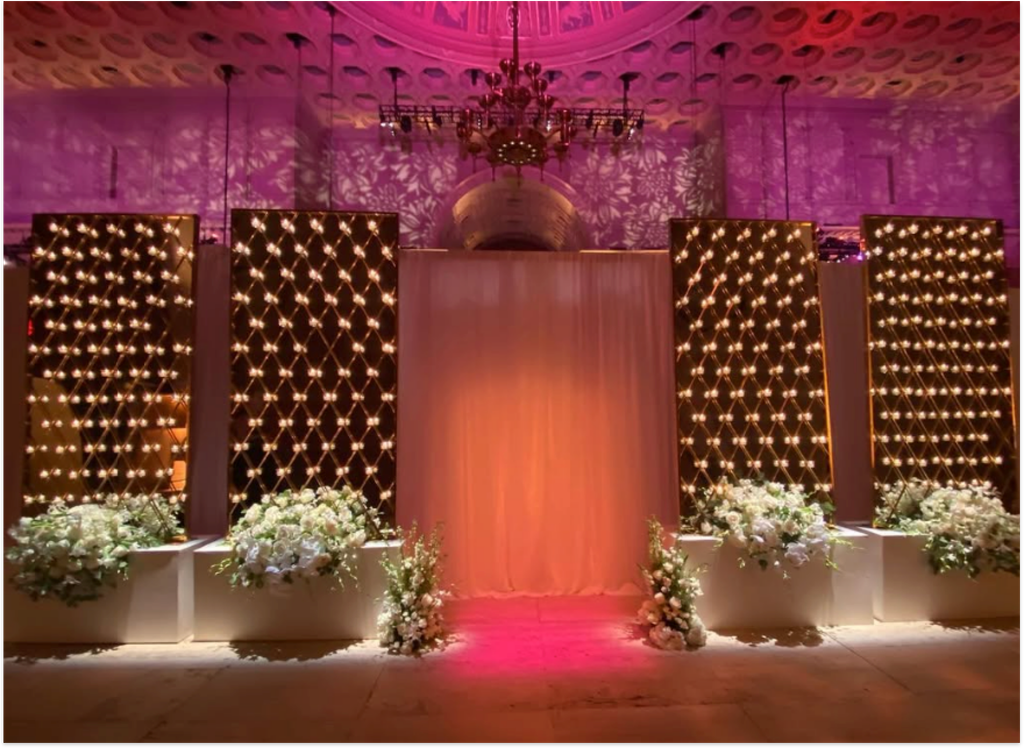
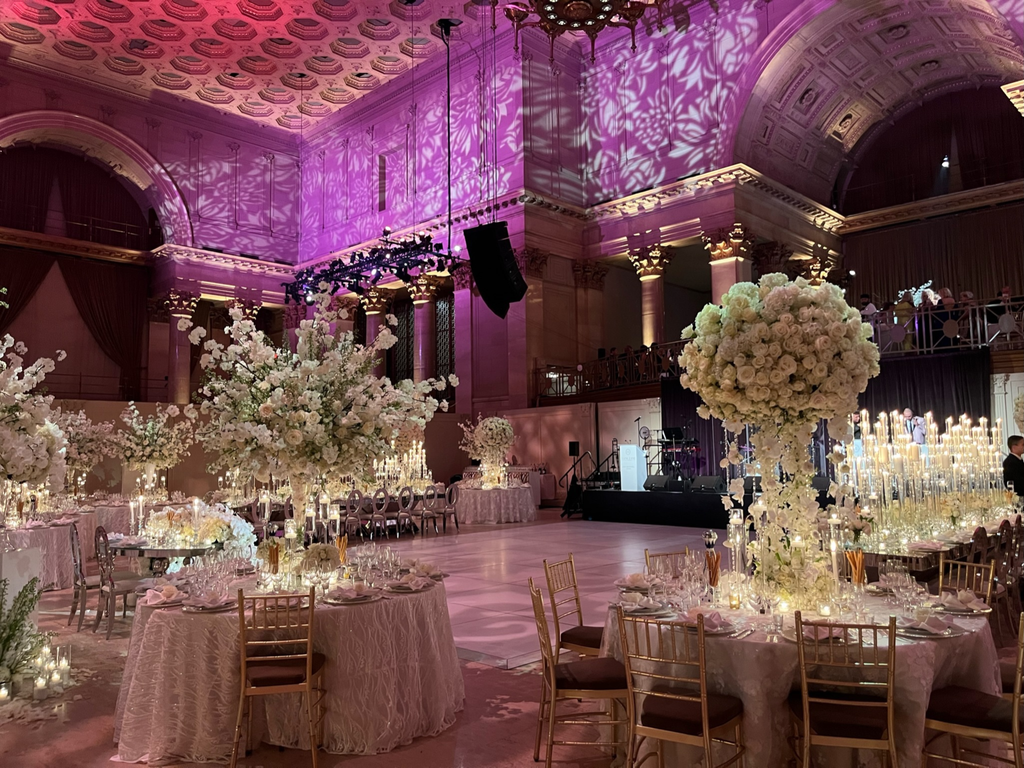
Gobos are templates placed inside a light fixture to project a pattern, graphic, or texture onto a surface. A monogram is one use, but gobos can also project botanical shapes, geometric patterns, abstract textures, or a couple’s custom design onto a dance floor, wall, ceiling, or backdrop. The effect reads as light and shadow rather than solid color. A pattern usually reads most clearly on a smooth surface without much competing light; textured walls or layered draping tend to soften it.
Wedding Lighting Terms Compared at a Glance
| Term | Plain meaning | What it usually affects | Design note |
| Uplighting/wall wash | Light aimed upward or across a surface | Walls, columns, draping, tent legs | Uplighting names direction; wash names coverage. |
| Pin spot/spotlight | Focused light on one target | Centerpieces, cakes, displays, people, stages | Pin spots usually highlight décor; spotlights often highlight people. |
| Gobo / monogram | Projected pattern or graphic | Dance floors, walls, draping, backdrops | A monogram is one gobo use, not the whole category. |
| Bistro/fairy lights | Overhead bulbs or tiny sparkle lights | Tents, terraces, trees, lounges | Bistro lights define space; fairy lights add shimmer. |
| Candlelight/room lighting | Table-level glow versus room-level light | Tables, glassware, mood, architecture | Candlelight adds warmth but does not light the whole room. |
How Lighting Changes Flowers, Linens, and Candlelight
Lighting affects how the finished design is seen. Once room light is lowered, unlit flowers, menus, glassware, and table details can recede. Pin-spotting or other accent lighting can help selected details remain visible without making the whole room feel bright.
Color matters too. Colored uplighting can unify a room, but it can also shift how blooms and linens read. A flower that looks soft in daylight may feel different under a saturated wall color. Warm and cool light can also feel different when layered together, even when both are technically doing their job. This is why lighting should be considered alongside the palette, flowers, fabric, and existing room light rather than chosen separately.
Candlelight adds warmth, flicker, and reflection at table level. It works beautifully with glassware, metallic details, and polished surfaces, but it reads as intimate only when the surrounding light is controlled. If the rest of the room is too bright, candlelight can disappear.

How the Lighting Plan Comes Together
Lighting also matters before the room is fully dark. Late-afternoon events, winter receptions, tented celebrations, and venues with darker corners can all need lighting to support the transition from daylight to evening.
As the event continues, dinner lighting and dance floor lighting do different jobs. While dinner often needs warmth, comfort, and enough visibility for the table to feel complete, dancing can carry more movement, color, and energy. The same room does not need to feel the same all night.
An event designer can help define the visual intention: what should feel warm, what should be highlighted, what should recede, and how the room should change from dinner to dancing. The planner, venue, lighting partner, production team, and photographer help translate that intention into the practical plan.
How Lighting Terms Help Shape the Final Event Design
Knowing lighting terms is about understanding what each type of lighting is meant to do. The right plan depends on the room, the existing light, the surfaces being lit, the floral and tabletop design, and the team responsible for execution. When those pieces work together, lighting does more than brighten the room. It shapes how the entire event is experienced.