

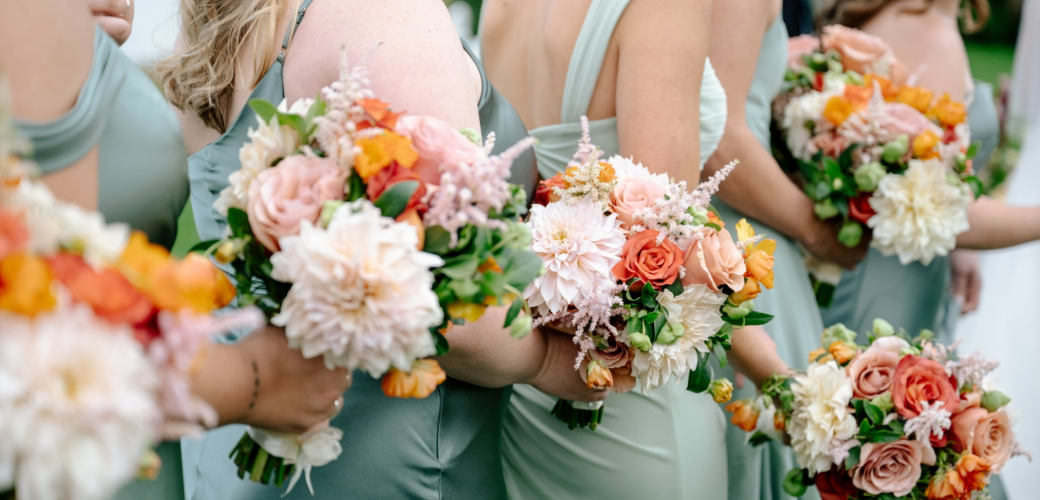
A wedding bouquet is often treated as a floral accessory, but it does more than complete a look. It appears in portraits, moves through the ceremony, sits against the gown, and introduces the floral language that continues through the rest of the event.
That is why bouquet style matters. Shape affects proportion, movement, photography, and how personal flowers relate to ceremony flowers, tablescapes, and the larger design environment. A round bouquet and a cascading bouquet may use some of the same flowers, but they create very different impressions.
Bouquet terms are not perfectly standardized, so the goal is not to memorize every label. The goal is to understand the main bouquet families well enough to describe the feeling, shape, and scale that make sense.
Classic and Compact Bouquet Styles
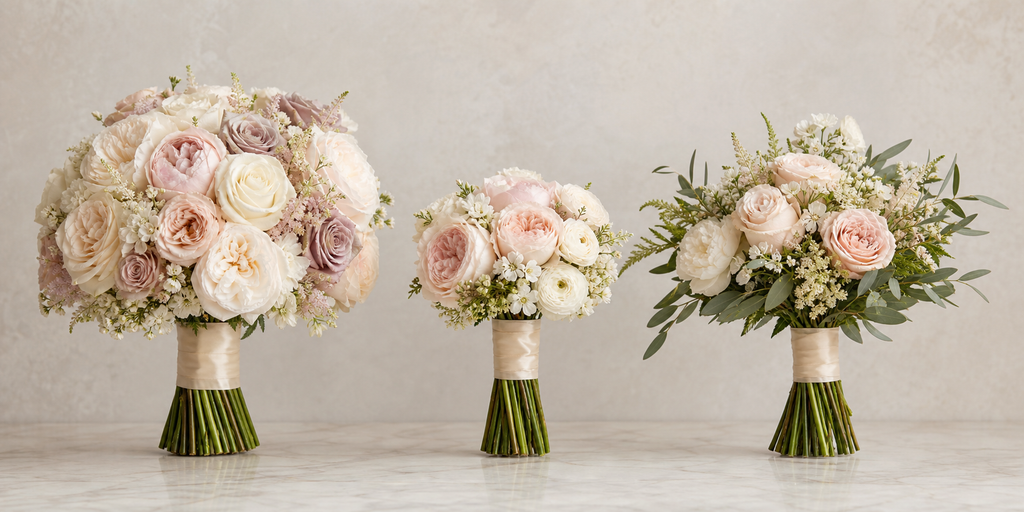
Classic bouquet styles are usually structured, rounded, and visually contained. They are often chosen when the overall feeling is polished, timeless, or refined.
A round bouquet is the classic example. It is full, balanced, and softly domed. Because its outline is controlled, it photographs clearly and sits neatly against the gown.
A posy bouquet is similar, but smaller and lighter in feeling. It can be useful when the gown has important details that should remain visible, or when the client wants elegance without much visual volume.
A nosegay is closely related. In many conversations, posy and nosegay are used almost interchangeably. When a distinction is made, a nosegay may include a little more greenery or a more defined edge around the flowers. The safest way to understand both is as compact, hand-held bouquets with a refined, intimate scale.
These styles are not limited to traditional weddings. A compact bouquet in a modern palette can feel current, while a round bouquet with softer, textural flowers can feel romantic rather than formal.
Loose, Garden, and Organic Bouquet Styles
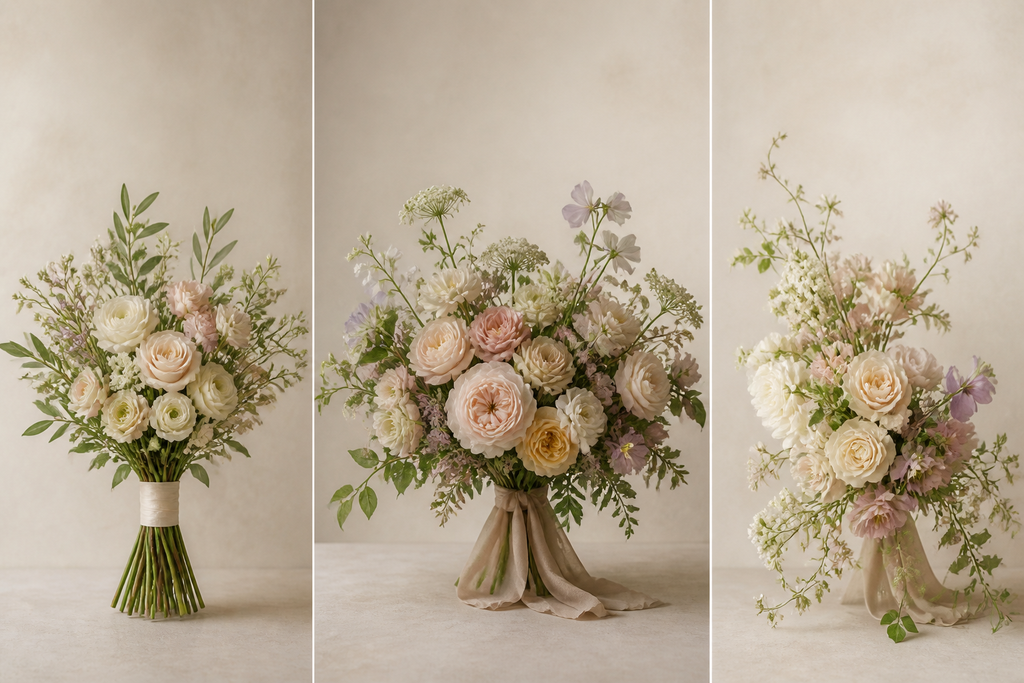
Loose, garden, and organic bouquets are more textural and movement-driven. These are the styles clients often describe as romantic, natural, or gathered.
A hand-tied bouquet refers to flowers gathered in the hand and tied at the stems. It can feel relaxed, but it may still be neat or structured depending on the design.
A garden-style bouquet is more about feeling than construction. It often looks abundant, layered, and slightly gathered, with varied textures, softer blooms, greenery, and flowers at different heights.
An organic or asymmetrical bouquet takes looseness further. Instead of mirror symmetry, it uses direction, line, and negative space. One side may extend more than the other, creating an artistic or editorial effect.
Loose does not mean casual or random. The more effortless a bouquet appears, the more important proportion, rhythm, and careful placement become.
Statement Bouquet Shapes
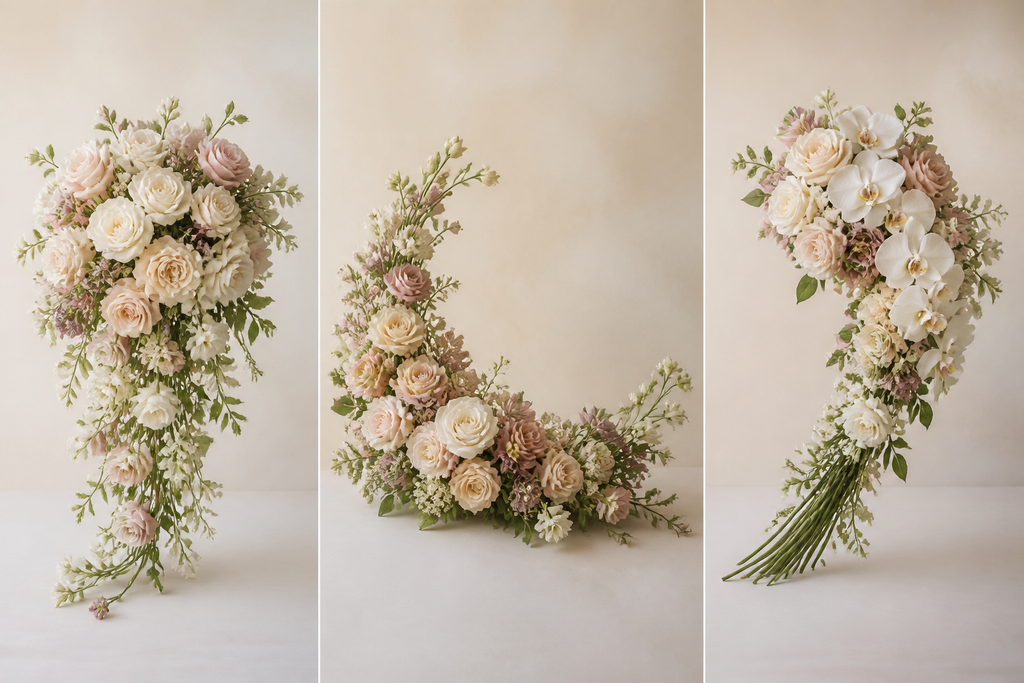
Some bouquet styles are defined by line and drama. They are useful when the bouquet is meant to create a stronger silhouette in portraits or carry a more sculptural presence.
A cascading bouquet creates downward movement, with flowers or greenery extending below the main body of the bouquet. It can feel romantic, formal, or dramatic depending on how it is designed.
A crescent bouquet forms a curve or arc. It can feel soft and garden-like, or more sculptural and modern, especially when the broader floral direction includes asymmetry.
A presentation bouquet, also called a pageant bouquet, is carried along the arm rather than held upright. It uses long lines and visible stem direction to create a fashion-oriented gesture.
Statement shapes require attention to how the bouquet will be carried, photographed, and seen against the gown. The right version is not simply the most dramatic one. It is the one that supports the full composition.
Minimal and Specialty Bouquet Styles
Not every bouquet needs fullness. A single-stem or minimalist bouquet can be powerful because of its restraint. It may use one expressive flower, a small grouping, or a clean line. In the right setting, that simplicity can feel intentional rather than unfinished.
Minimal bouquets work best when the larger design supports that restraint: a sleek gown, modern venue, or highly edited color palette.
Specialty styles, such as a composite or glamelia bouquet, are more specific. They arrange petals to create the impression of one large bloom. These are best understood as couture floral techniques rather than mainstream bouquet categories.
How to Choose a Bouquet Direction
Choosing a bouquet style is not only about liking a photo. Inspiration images rarely show how the bouquet feels in hand, how it moves during portraits, or how it relates to the gown and setting.
Proportion is a useful place to begin. The bouquet should feel connected to the gown rather than covering it or disappearing against it. A structured gown may work beautifully with a cleaner bouquet shape. A softer gown may invite more movement.
Venue and season matter too. A ballroom, garden, estate, tent, or city venue suggests a different design language. Some flowers bring softness, some bring structure, and some create trailing movement. If a favorite flower is unavailable or not right for the conditions, the style can often still be achieved with materials that create a similar feeling.
The wedding party is part of the same conversation. Bridesmaid bouquets do not need to be smaller copies of the bridal bouquet. They can coordinate through palette, texture, flower language, and scale while allowing the bridal bouquet to remain the focal personal floral.
Comfort matters across portraits, the processional, the ceremony, and transitions. A bouquet can be beautiful and still be the wrong scale for how the day unfolds.
The right bouquet is not simply the one that matches a photo. It is the one that belongs with the gown, season, setting, and larger floral direction of the wedding. When the style language is clear, the bouquet can support the person carrying it and become the first close expression of the wedding’s floral story.