

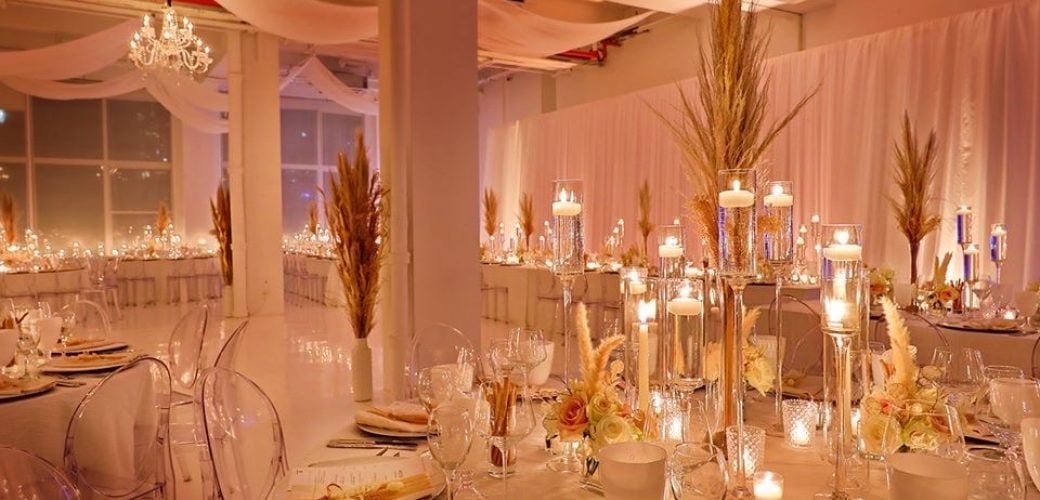
Fabric framing an entrance can give guests a sense of arrival. Carried around the room, it can create a softer setting for everything that follows. Event draping brings texture, shape, and another layer of depth to a space. The material, the way it falls, and the surrounding light all shape the finished effect. This guide explains common draping fabrics, uses, and terms to help you understand the options and describe what you envision for your event.
What Should Event Draping Do for the Space?
Think first about how you’d like the space to feel. Perhaps you’re imagining a soft frame around the ceremony flowers, a welcoming entrance, or a smaller gathering area within a generous room. That vision helps give the fabric a purpose. It could be drawing attention to a favorite detail or allowing part of the room to recede.
It also helps to consider how much of the room you’d like to remain visible. A sheer backdrop can add a gentle layer of fabric in front of a dark or patterned wall while allowing its details to show through. If you’d prefer to hide the wall or create privacy, the design may need a more opaque fabric or backing; gathering a sheer into fuller folds won’t necessarily provide that coverage.
You may hear several terms used to describe a single design. A ceremony backdrop, for example, might use voile gathered into soft folds and held by a pipe-and-drape system. Each term describes a different part of the design: the fabric, how it’s arranged, where it’s used, and what supports it.
Common Event Draping Fabrics and Their Uses
Fabric labels describe different things. Polyester identifies a fiber; satin describes a weave that creates a lustrous surface; Poly Premier is a supplier or product label. A polyester drape can therefore be sheer, matte, or shiny, depending on how it is made.
| Fabric or label | Typical visual character | Common uses and key distinction |
| Chiffon | Soft, lightweight, sheer, with a fluid appearance | Flowing backdrops and decorative ceiling treatments; allows backgrounds to show through. |
| Voile | Soft, sheer fabric that gathers into gentle folds | Gathered backdrops, ceiling draping, and light-filtering treatments. |
| Matte polyester event drape / Poly Premier | A comparatively even, understated surface; specifications vary by supplier | Backdrops and room division; the name does not guarantee opacity. |
| Satin | Smooth surface with a sheen that catches light | Focal backdrops, entrance framing, and decorative swags. |
| Velvet/velour | Soft pile, giving the surface texture and visual depth | Textured backdrops and stage settings; velour is a related, often lighter pile fabric. |
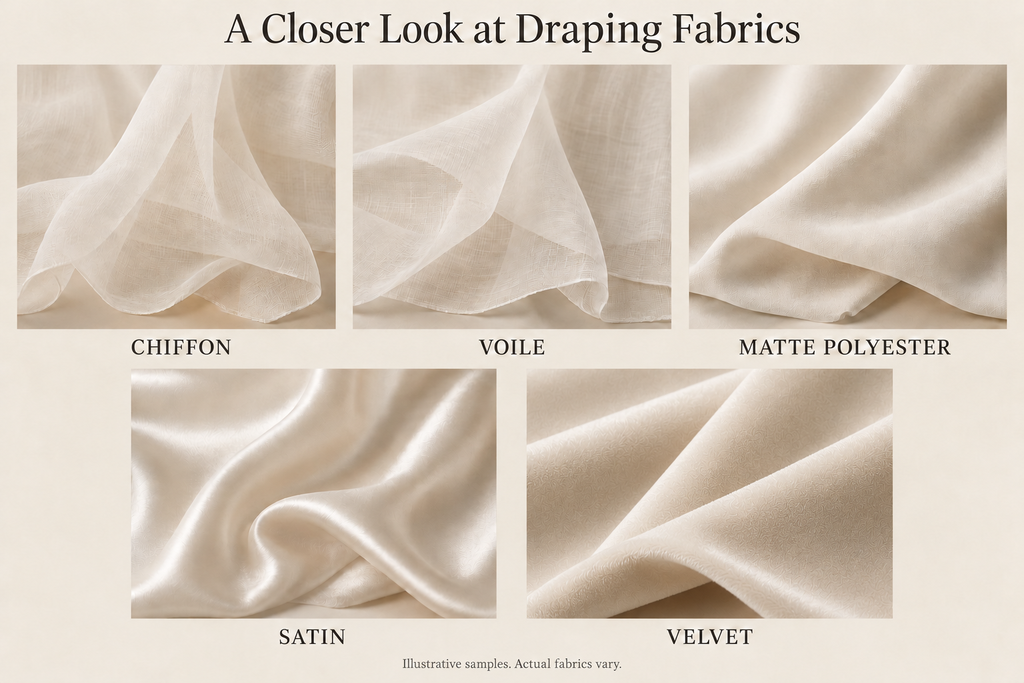
Chiffon often feels delicate and fluid, falling into loose, flowing folds. Voile can have a little more body and hang straighter, giving a gathered backdrop a more defined shape. The difference varies by product, so ask your event designer for samples. Feel the fabric, hold it up to the light, and see how it gathers to compare its weight, transparency, surface, and the way it falls.
As you explore the samples together, consider how those qualities fit the room you’re imagining. You might want fabric that lets the architecture show through, adds a little shimmer to an entrance, or creates a quiet background for the flowers.
Event Draping Terms: Panels, Fullness, and Pipe and Drape
A panel is one section of fabric. Several panels can form a continuous backdrop or wall treatment, with their arrangement shaping how the finished surface looks.
Fullness refers to the extra fabric used to create folds. Imagine the same material hanging relatively flat, then gathered more closely across a narrower span. The second arrangement has more pronounced folds and a different sense of depth. More fullness is not automatically better; the right amount depends on the fabric, proportions, and intended effect.
Gathers create soft, distributed folds, while pleats introduce more deliberately shaped folds. These choices can make the same broad material category feel relaxed or more tailored.
Pipe and drape describes a supporting framework combined with fabric panels, often used for temporary backdrops or space division. It does not identify a particular fabric or style. A proposal that mentions pipe and drape still needs to establish the material and arrangement that will create the desired look.
Ceiling Draping and Tent Liners: What Is the Difference?
Ceiling draping uses fabric arranged overhead to soften the space. One familiar form is a swag, where the fabric dips into a gentle curve between points. Swags can bring softness to a ceiling while leaving portions of the structure visible between them.
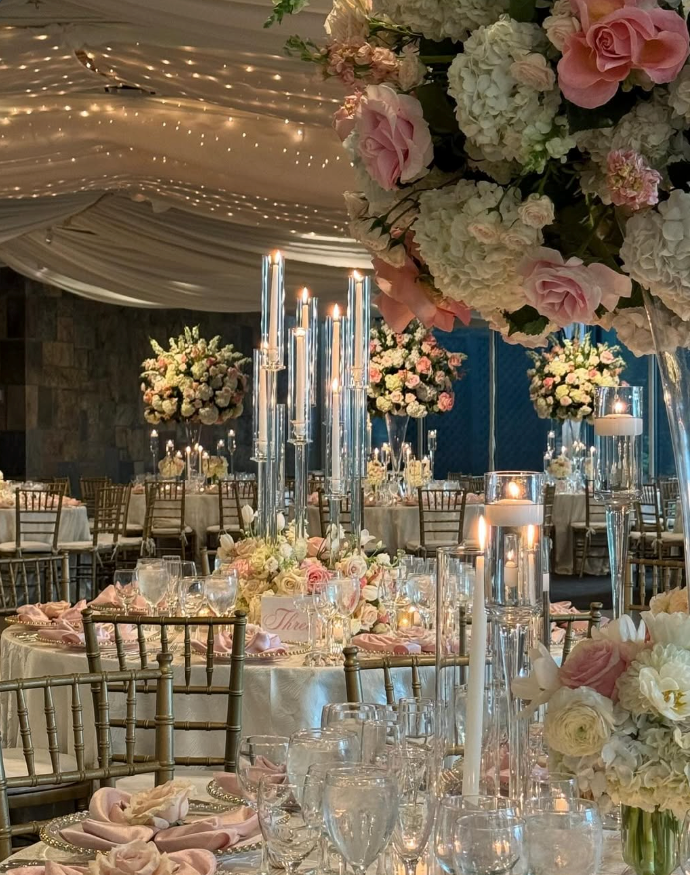
A tent liner is a fitted fabric covering designed for the particular tent structure. It creates a more continuous ceiling treatment, with the extent of coverage depending on the system and design.
A few decorative swags and a fitted liner therefore describe different visual treatments and scopes of work. Clarifying which is intended helps everyone picture the same overhead space.
How Lighting Changes the Finished Look
Fabric and lighting work together: sheen catches light, folds create depth, and sheers allow light through. A sheer backdrop seen against daylight may reveal more of its surroundings than the same treatment under evening event lighting.
When discussing the design, describe whether you want to frame, soften, or conceal, then review the proposed fabric in the relevant lighting conditions and confirm whether it provides the coverage you need.
Venue permissions and the fabric’s documentation should be confirmed with the installation team.
The most considered choice brings the material, arrangement, and intended effect together, giving the flowers, lighting, and architecture a shared setting that feels thoughtfully composed.