

Event design has a language of its own. Clients often first encounter it inside a proposal, floor plan, rental order, or venue conversation, just as decisions need to be made.
Terms such as pin-spotting, room turn, custom fabrication, and strike can sound more technical than they are. Each one names a real part of how an event is imagined, organized, installed, and experienced.
If you are planning a wedding or mitzvah event, you do not need to become a production expert. The same is true for a corporate event or social event. You do need enough shared language to understand what is being proposed, approved, and built.
Who Does What in Event Design?
The first confusion is often not a design object, but a professional title. Roles can overlap, and the proposal will usually tell you more than the title alone.
An event designer develops the complete visual and spatial direction of an event. That may include the atmosphere, palette, flowers, lighting, furniture, linens, floor plan, and the relationship between those elements.
An event planner manages the broader planning process, including schedules, budgets, contracts, vendor coordination, and logistics. An event coordinator is usually more focused on timing and execution as the event approaches. A florist or floral designer specializes in flowers and botanical design, although some floral studios also offer broader event design services.
How Does an Idea Become a Designed Room?
Event design usually moves from an emotional idea to a physical plan.
Creative direction or a design concept is the central idea behind the event. It is broader than a theme or color palette. It describes the atmosphere the design is meant to create.
A mood board or inspiration board collects images, colors, textures, and references to establish a shared visual language. It is not a literal picture of the final event.
A rendering is a more specific visual representation of a proposed design, such as a ceremony structure, table, stage, or room. A floor plan is a scaled overhead view showing where tables, bars, stages, lounges, dance floors, entrances, and other elements will be placed. It also shapes guest flow, or how people move through the event.
What Do Floral and Physical Design Terms Mean?
A centerpiece is a focal arrangement placed on a table. It may be floral, candle-based, botanical, sculptural, or a combination of materials.
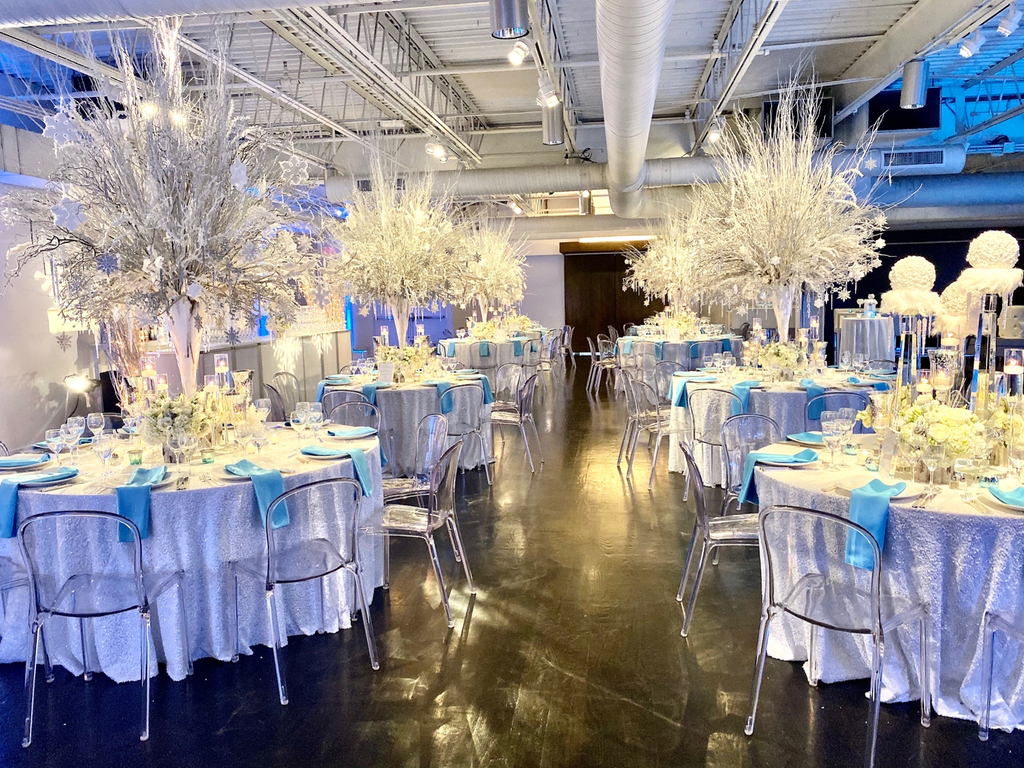
A tablescape is the complete table composition: centerpiece, linens, candles, dinnerware, glassware, stationery, and other details working together.
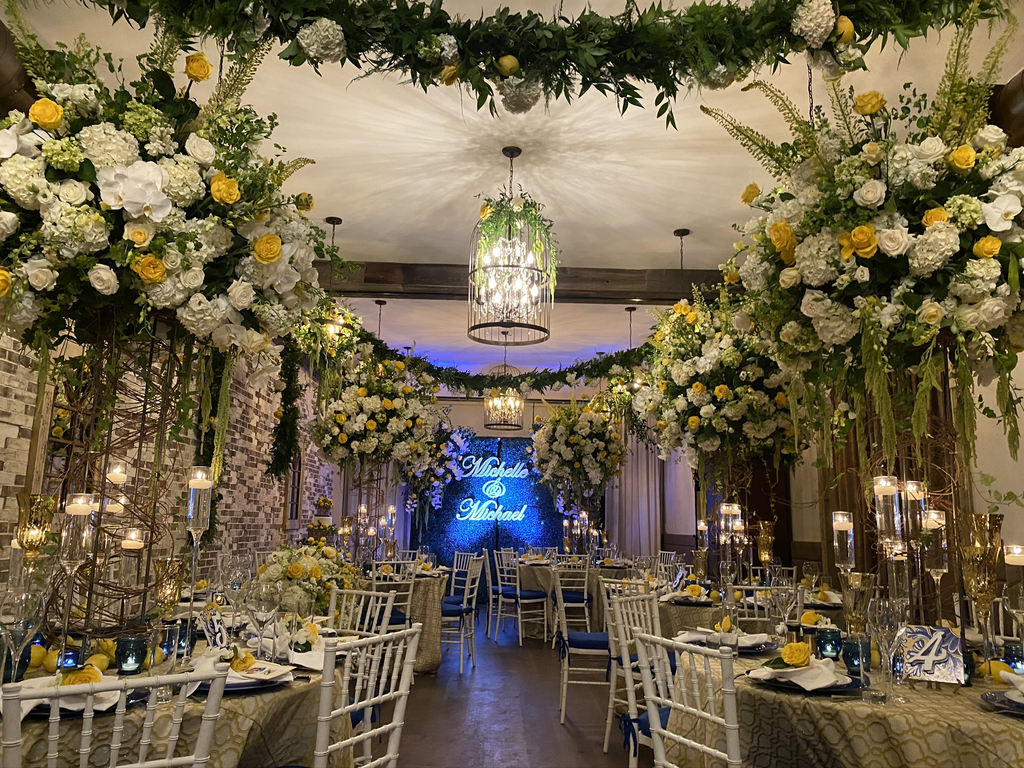
A floral installation is larger-scale floral work created for a particular part of the venue, such as an entrance, staircase, wall, ceiling, or stage area. The word usually signals more site-specific labor and planning than a self-contained arrangement.
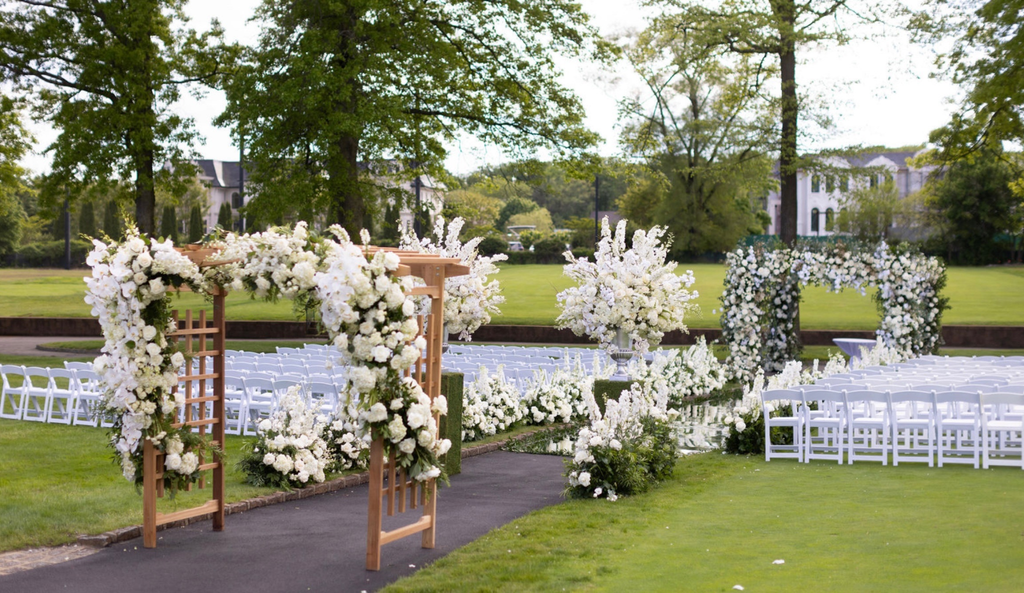
A ceremony structure is the designed focal element behind or around the participants in a ceremony. It may be an arch, frame, freestanding structure, or custom backdrop.
Custom fabrication refers to something built or adapted for a specific event, such as a bar, display wall, backdrop, or stage feature. Rental inventory already exists and can be selected from a studio or rental company. Strong event design often uses both. A lounge grouping arranges sofas, chairs, ottomans, and tables into an informal seating area.
What Table and Seating Terms Should Clients Know?
A charger is the large decorative plate beneath the dinnerware. It adds color, material, and visual weight, but it is generally not the plate used for the main course.
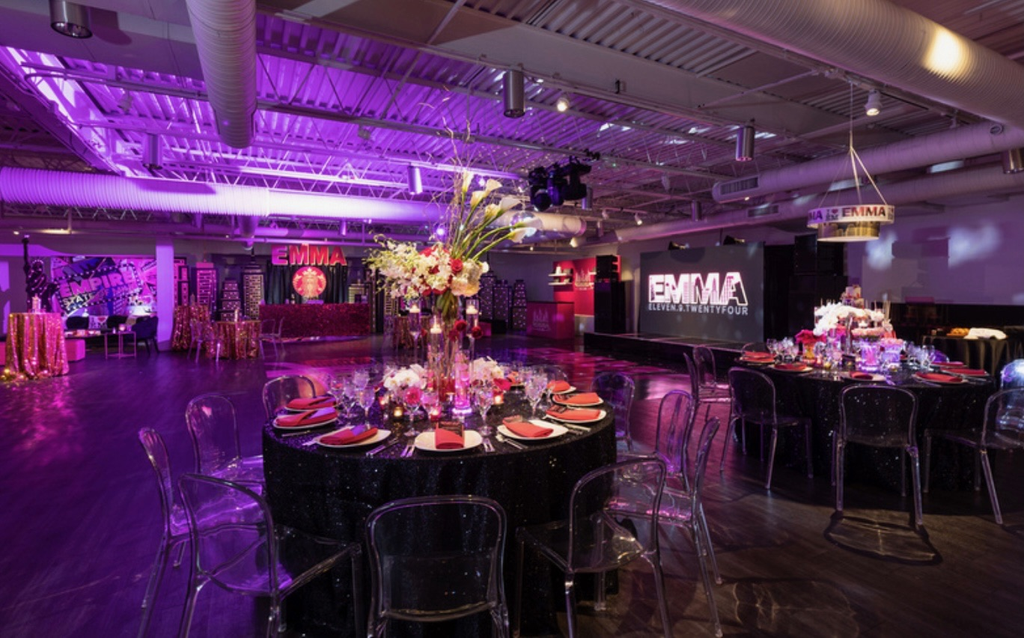
A place setting is the complete arrangement prepared for one guest, including plates, flatware, glassware, napkin, menu, and sometimes a place card.
Seating language is easy to confuse. A seating chart is one central display listing guests and assigned tables. An escort card is an individual card or object that directs a guest to a table. A place card sits at the table and identifies a specific seat. A table number or table name identifies the table itself.
Not every event uses all of these tools. The right combination depends on whether guests are assigned to tables only or to individual seats.
How Do Lighting and Draping Terms Differ?
Lighting does more than make a room visible. It determines what the eye notices, how colors read, and whether the room feels warm, intimate, or energetic.
Uplighting places fixtures near floor level and directs light upward onto walls, columns, or draping.
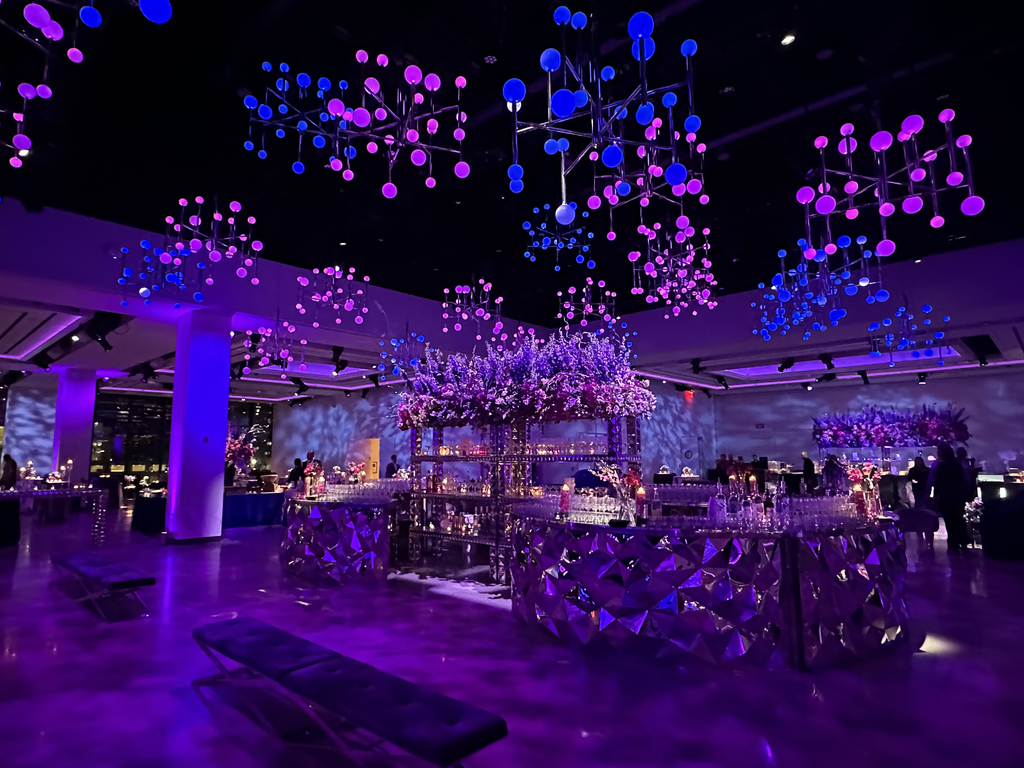
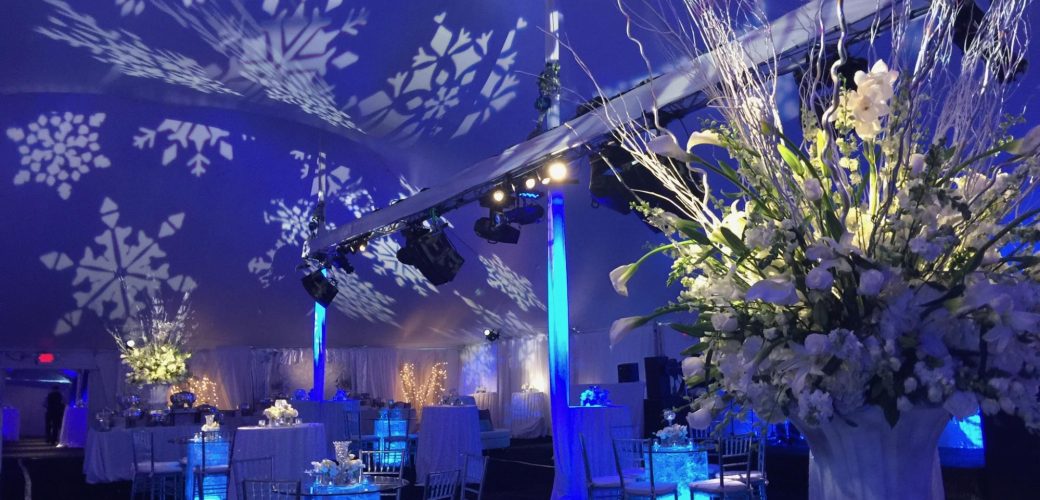
Pin-spotting uses narrow, focused light to highlight a specific feature, such as a centerpiece, cake, or floral installation. Wash lighting spreads broader illumination across a stage, wall, dance floor, or room area.
A gobo projection casts a pattern, texture, or monogram onto a surface. Pipe-and-drape is a freestanding framework used to hold fabric, while masking hides production equipment, doors, service areas, or visual distractions.
What Happens During Installation and After the Event?
The finished room may appear all at once to guests, but the work happens in phases.
Load-in is the scheduled process of bringing flowers, furniture, lighting, rentals, and production materials into the venue. Installation or setup is the assembly, placement, and styling of those elements.
A room turn, sometimes called a room flip, is the transformation of the same space from one use to another during the event.
At the end, strike or teardown is the dismantling and packing of the design. Load-out is the removal of those materials and equipment from the venue. These phases are sometimes described loosely, but each one needs its own time, labor, and coordination.
Clear Language Creates a Better Design Process
Event design brings together flowers, furniture, lighting, spatial planning, installation, and guest experience. The terminology exists because those parts of the process are different, even when guests experience them as one complete environment.
Clients should feel comfortable asking what a term includes, who is responsible for it, and how it affects the final room. Clear language keeps the design conversation focused on what matters most: creating an event that feels cohesive, considered, and complete.